

Figuring out the right time for your child to take the SAT can feel confusing. With so much conflicting advice online, it’s hard to know when to start, how often to test, and what strategy will lead to the best results without causing unnecessary stress.
It’s a common question we hear from parents, and the answer is more than just a date on a calendar. Even as some colleges have become test-optional, SAT and ACT scores are still important for many applications, scholarships, and placement decisions. While most students find success taking the SAT for the first time in the spring of their junior year, the best timing is unique to your child. Their academic readiness, college ambitions, and even their extracurricular schedule all play a role.
This guide will walk you through when your child should take the SAT based on their grade level and provide a practical retake strategy to help them feel confident and prepared.
How Early Can a Student Take the SAT?
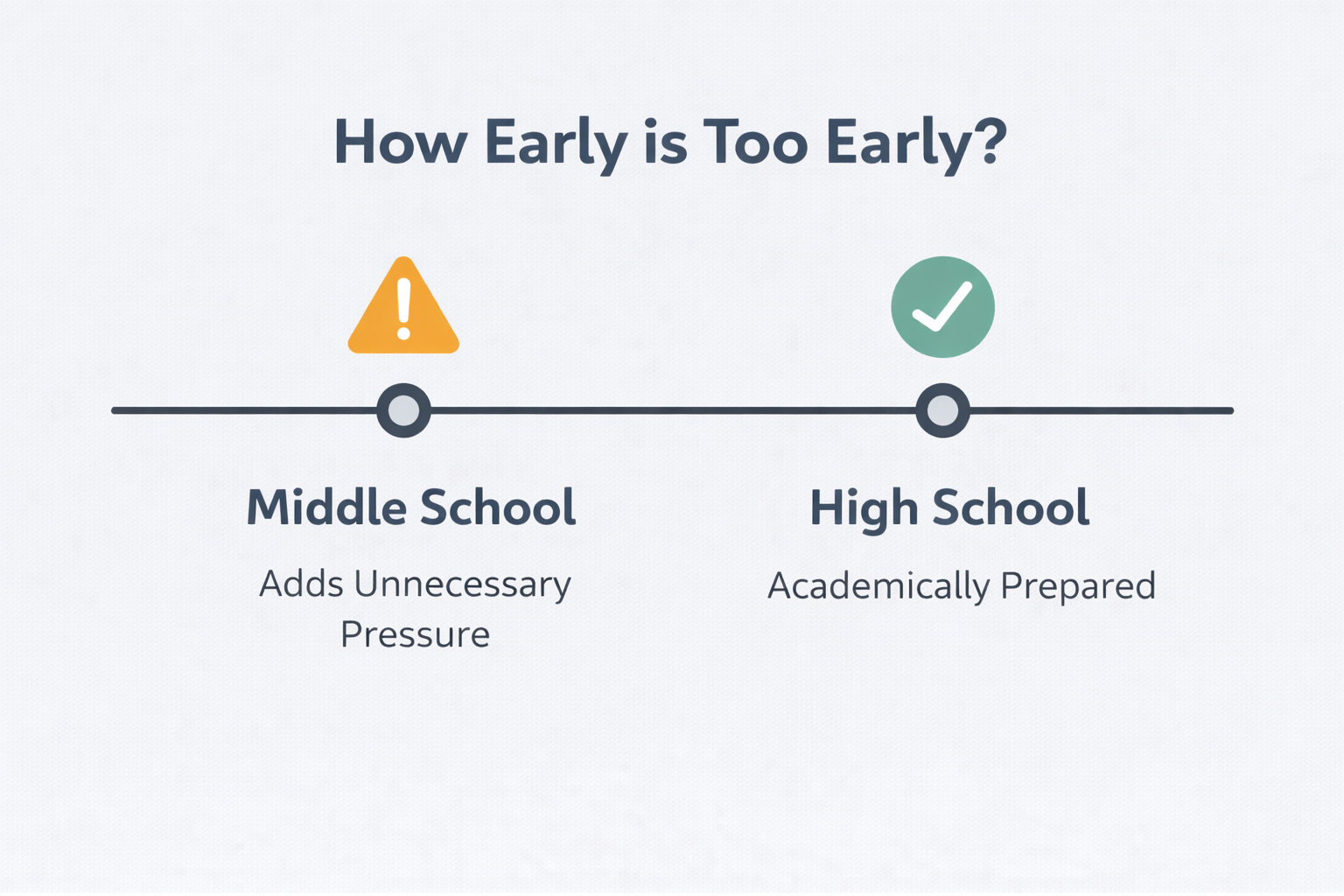
Technically, a student can take the SAT as early as middle school, and some do to qualify for youth talent programs. However, for most students, testing this early adds pressure without providing a real advantage.
We generally find that waiting until they are academically prepared makes more sense. The SAT covers advanced math concepts, including Algebra II and trigonometry, that most students don’t fully learn until their sophomore or junior year. Similarly, the critical thinking and reading comprehension skills needed for the exam develop and mature throughout high school.
Is Earlier Always Better? Not for the SAT. An early score rarely reflects a student’s true potential and can sometimes discourage them more than it helps. Unless a specific program requires it, waiting until your child is truly ready is almost always the better approach.
SAT Timing by Grade Level
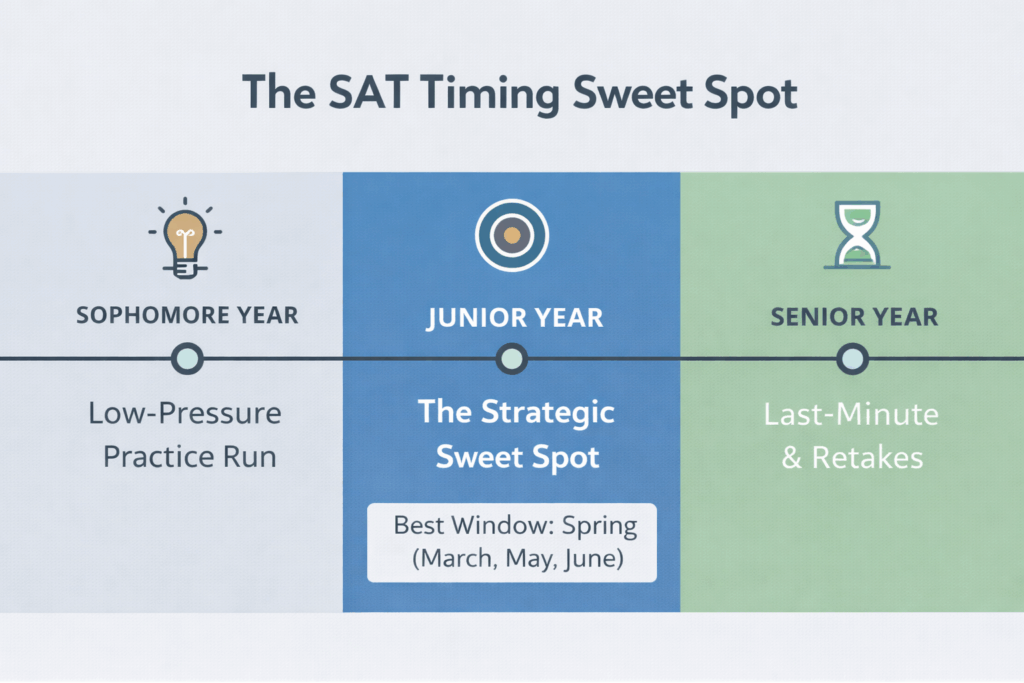
Sophomore Year: A Low-Pressure Practice Run
For a small number of academically advanced students, taking the SAT in the spring of sophomore year can be a useful, low-pressure experience. If your child has already completed Algebra II and consistently performs well in their classes, a sophomore-year test can serve as a helpful baseline. It allows them to get comfortable with the official testing environment and see where they stand, reducing some of the anxiety that can build up around junior year.
However, it’s important to remember that this score is not a final reflection of their ability. The primary goal is experience, not a perfect score.
Junior Year: The Strategic Sweet Spot
For the vast majority of students, junior year is the ideal time to take the SAT. It offers the perfect balance of academic preparedness and scheduling flexibility.
The most strategic window is in the spring of junior year (March, May, or June). By this point, students have covered most of the math and English content on the exam. Taking the test in the spring also leaves the summer open for focused preparation and allows for a retake in the late summer or early fall of senior year.
The Takeaway for Most Families: For most students, the sweet spot for the first SAT is the spring of their junior year. This timing provides the best balance of academic readiness and flexibility for a potential retake before applications are due.
Senior Year: For Last-Minute Situations
Ideally, senior year should be for focusing on applications, not taking the SAT for the first time. However, if circumstances like a school transfer or health challenges prevented earlier testing, it’s still manageable. With a packed schedule, it’s crucial for students to learn priority management hacks to help them stay on track.
The best dates for seniors are in late summer or early fall (August, September, or October). The October test date is typically the last one accepted for early decision/early action deadlines. For regular decision deadlines, the November and December tests are options, but the timeline for receiving and sending scores becomes very tight.
How Many Times Should Your Child Take the SAT?
Our experience shows that taking the SAT two or three times is often the most effective approach. Simply retaking the test isn’t a guarantee of a higher score, but a strategic plan can make a significant difference.
According to the College Board, students often see a score increase between their first and second attempts as they become more familiar with the test. A third attempt may yield smaller gains, while scores rarely improve significantly after three tries.
What’s the Magic Number for Retakes? We find that 2-3 focused attempts work best for most students. The goal is to build confidence and reach a target score, not to test endlessly. After three attempts, their time may be better spent on other parts of their application.
Creating a Smart Retake Strategy
Taking the SAT more than once only helps if there’s a clear plan for improvement between test dates.
Analyze the Results
First, sit down with your child and the score report. Go beyond the final number and look at the section-by-section breakdown. Did they struggle with time management in the Reading section? Were there specific math concepts they hadn’t mastered? Understanding why they lost points is the key to improving.
Create a Focused Plan
With this insight, you can create a targeted preparation plan. Instead of just taking more practice tests, they can dedicate their time to the specific areas that need the most support. Part of this plan should involve helping your child turn your home into a learning haven where they can study effectively. Allow at least two to three months between tests for meaningful preparation.
Time the Retake Thoughtfully
Look at the calendar together. Choose a retake date that doesn’t conflict with AP exams, school finals, or major extracurricular commitments. The goal is to set your child up for success by giving them the time and space to prepare without feeling overwhelmed.
Strategy Over Repetition: A higher score isn’t automatic on a retake. The key is strategic preparation. Spend time analyzing the first score report to create a focused plan that targets specific areas for improvement.
A Sample SAT Timeline
While every student’s journey is different, this table offers a clear, simple guide to help you plan.
| If Your Child Starts In… | Recommended First Test | Strategic Retakes |
| Sophomore Year | May or June (for low-pressure experience) | Spring of Junior Year (first official attempt) and Fall of Senior Year (if needed). |
| Junior Year (Most Common) | March, May, or June | August or October of Senior Year (after summer prep). |
| Senior Year | August or September | October (for early deadlines) or November/December (for regular deadlines). |
The Role of Preparation in Building Confidence
Does my child really need to prepare before their first SAT? Yes. Even for students who do well in school, preparation makes a significant difference. Understanding the test format, learning time management strategies, and knowing what to expect from each question type helps build the confidence they need to perform their best on test day.
Effective preparation involves more than just drilling questions. It starts with taking a full-length practice test to establish a baseline. From there, your child can focus on the areas that need the most support, learning not just the right answers but the strategies behind them.
While many students can prepare on their own, sometimes you may notice signs that it might be time to find a tutor. If your child feels overwhelmed by self-study or you’re looking for a more personalized roadmap, a tutor can help. At Tutor Doctor, we specialize in creating customized SAT prep plans based on each student’s learning style, goals, and schedule. Understanding the benefits of one-to-one tutoring can help you decide if it’s the right fit for your family.
Your SAT Plan at a Glance
The SAT is just one part of your child’s college application. The goal isn’t to test endlessly but to help them achieve a score they feel proud of with a clear, low-stress plan so they can focus on the other parts of their application that show colleges who they are.
To recap, most students benefit from taking their first SAT in the spring of their junior year, with a plan for one or two strategic retakes. By allowing adequate preparation time and choosing test dates that fit your family’s schedule, you can turn a stressful process into an empowering one.
If you’re ready to create a personalized SAT plan that builds confidence and fits your family’s schedule, we’re here to help. Our tutors specialize in one-to-one SAT preparation that goes beyond just practice questions. Learn more about how Tutor Doctor can support your child on their journey.