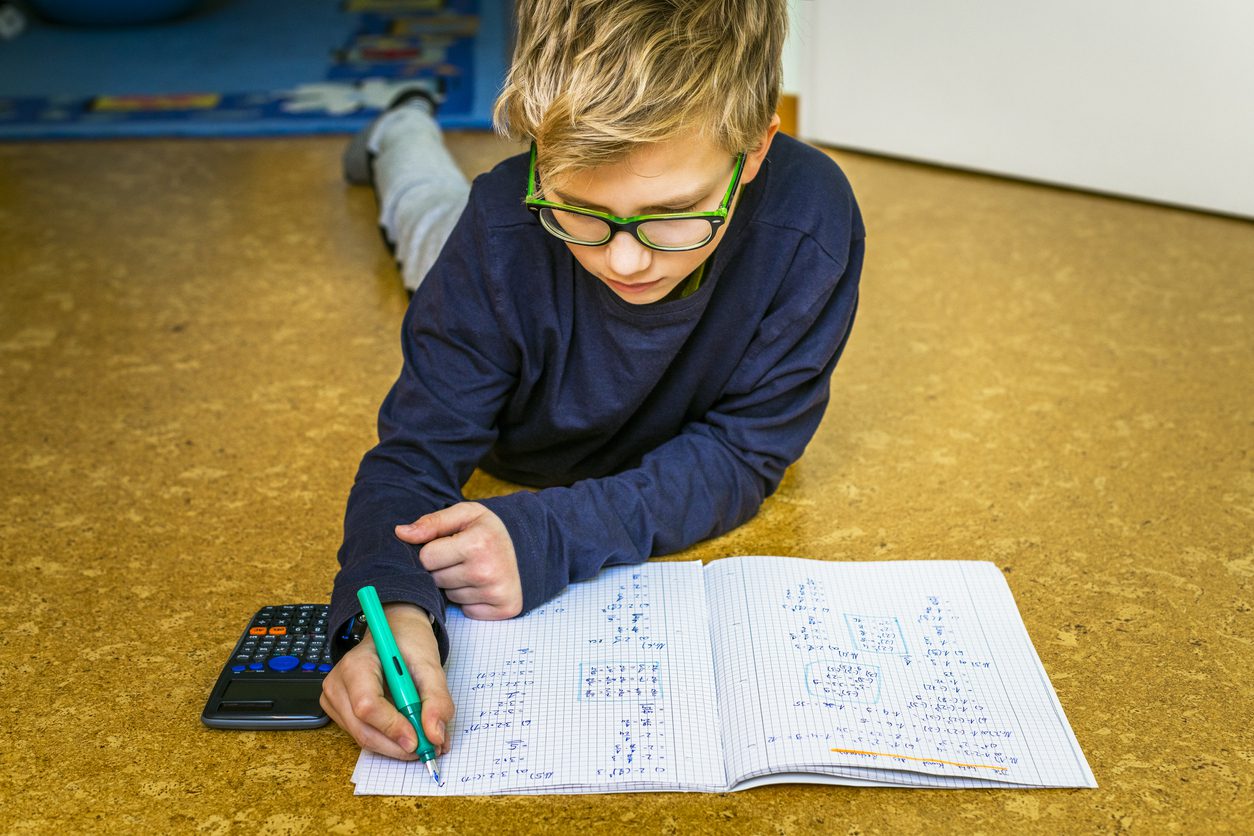

If your child groans at the mention of math homework and you’re beginning to worry about their relationship with math learning, you’re not alone. Math anxiety is said to affect up to 82% of students, but the good news is that mathematical ability isn’t fixed. With the right approach, every child can develop both math confidence and competence.
These 12 creative ways to make math fun and engaging for kids will help you turn those groans into genuine excitement.
1. Kitchen Math Activities
The best place to start is where you already spend time together: the kitchen.
While making cookies, ask: “If we need 2 cups of flour but only have a ½ cup measure, how many scoops?” This helps you teach division without having to use worksheets. Make personal pizzas and discuss fractions as you add toppings. Half pepperoni, one-quarter cheese. You could also implement timer challenges: “If we start cooking at 4:15 and it takes 25 minutes, when will dinner be ready?”
Let your child be the “head chef mathematician” who’s responsible for all the measuring and calculating.
2. Math Treasure Hunts
Hide clues with age-appropriate problems throughout the house: “Solve 15 – 8 to find out how many steps to take toward the couch.” Create word problems using family members’ names, and end with small rewards like choosing the family movie.
This creates excitement within the home and helps to turn math into an exhilarating tradition.
3. Building Activities with Math
Construction toys teach spatial reasoning, patterns, and measurement. Create pattern towers using repeating color sequences. Build towers and compare heights using rulers or paper clips. Construct symmetrical buildings. Build rectangles with the same perimeter but different areas to explore how space can be arranged in multiple ways.
4. Math Storytelling

One of the most accessible and engaging ways to make math activities creative and to build a solid foundation is to add narrative. Create ongoing adventures featuring your child as the hero: “Detective [Child’s Name] needs to figure out how many clues they’ve collected to solve the mystery.” Also use their favorite characters in word problems and let them create story problems for you to solve.
5. Card Games for Math
A standard deck of cards offers countless opportunities for fun math games that build fluency without drill work.
In Addition War, each player flips two cards and adds them. The highest sum wins all four cards. Multiplication War uses the same concept with multiplication. In Salute, two players put cards on their foreheads while the parent announces the sum and the players deduce their own number. Make 24 challenges players to use four cards and any operations to equal exactly 24.
| Age Group | Card Game | Skills Practiced | Setup |
| 6-8 years | Addition War | Addition, comparing numbers | Two players, split deck, flip two cards each |
| 8-10 years | Multiplication War | Multiplication facts, mental math | Same as addition war but multiply cards |
| 7-11 years | Salute | Algebraic thinking, subtraction | Three people: two players, one caller |
| 9-12 years | Make 24 | All operations, problem-solving | Four cards dealt to each player |
6. Math Through Art and Music
Math can be easily connected to other subjects your child loves. Mathematical Art Projects seamlessly blend creativity with learning. Fibonacci spirals help them draw the spiral patterns found in sunflowers and shells while learning about number sequences. Geometric sculptures using clay or recyclables provide hands-on experience with 3D shapes and spatial relationships.
Musical Math reveals the mathematical foundations of melody and rhythm. Rhythm fractions teach that whole notes, half notes, and quarter notes represent mathematical relationships through musical beat. Pattern recognition develops through clapping rhythmic sequences. Musical math connects mathematical ratios to the harmonies we find beautiful.
These cross-curricular connections help children see that math isn’t isolated. It’s practical and woven throughout the human creativity and expression that they love.
7. Math Apps and Technology
Digital tools can transform math practice into an adventure. Interactive platforms make math exciting through games, feedback, and adaptive challenges that meet children at their level. Programs such as Prodigy Math Game (Pokemon-style gameplay), DragonBox, and Motion Math combine competition and creativity, giving children ownership of their learning.
You don’t need expensive apps to see results. The key is finding tools that match your child’s learning style and interests.
8. Outdoor Math Activities
Most kids love to play, and with this strategy, you can help them love math, too.
Movement Games combine physical activity with math. Practice skip counting by 2s, 5s, and 10s while jumping rope. Create basketball shooting challenges that involve addition and multiplication.
Nature-Based Math turns the outdoors into a learning space. Create sidewalk chalk number lines and geometry shapes. Track plant growth, calculate garden areas, and measure rainfall. Keep sports statistics like personal records and game scores.
9. Real-World Math Connections
Answer the eternal question “When will I use this?” by showing math in action.
Shopping provides an immediate math application. Let your child manage a small budget at the store and plan meals within a weekly grocery budget. Time and Scheduling activities help children understand temporal mathematics. Create family schedules and calculate time between activities.
Home Improvement Projects naturally incorporate measurement and geometry. Measure rooms for furniture or decorations, calculate paint needed for walls, and design and build simple projects.
When children see immediate, practical applications, they develop number sense rather than just procedural skills.
These real-world applications show mathematics as a useful tool for daily life, and children see immediate results from their mathematical calculations.
10. Everyday Objects Math
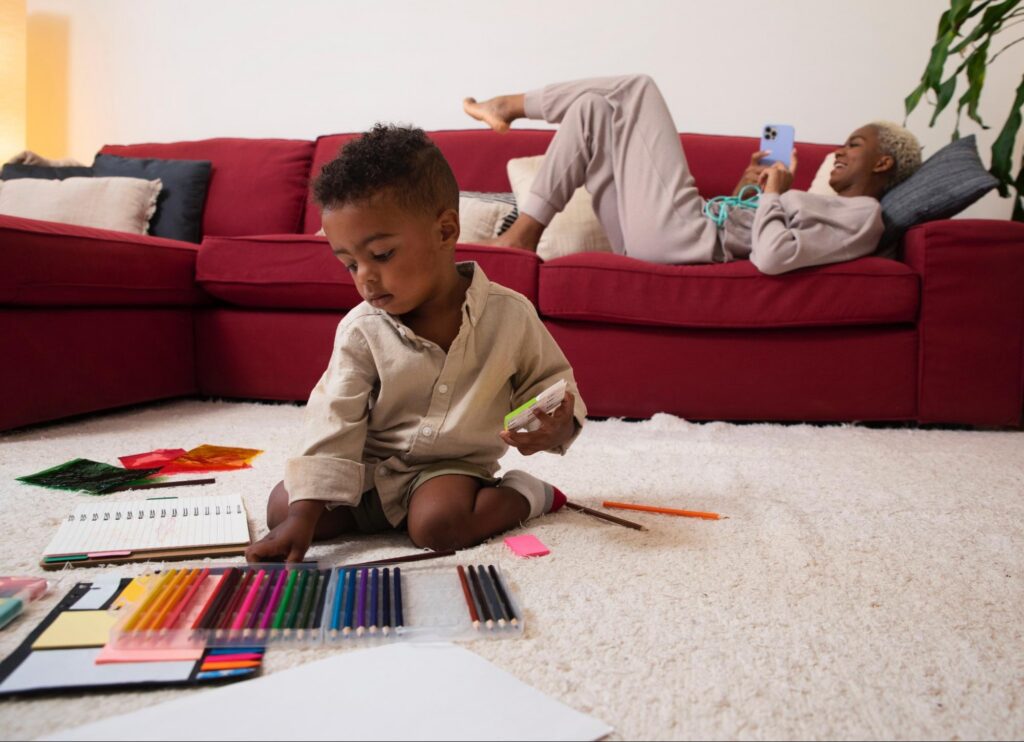
The materials you already have at home can create fun in some unexpected ways. You can gather interesting objects like buttons, shells, or coins and count them in different ways. Sort by attributes and create graphs to visualize data.
Measure family members’ heights and create comparison charts. Use body parts like hand spans and footsteps as measuring tools to understand units.
Finally, you can explore capacity with kitchen containers and water play, discovering relationships between different-sized vessels.
These activities cost nothing but provide rich mathematical experiences that build deep understanding.
11. Collaborative Problem-Solving
Mathematics becomes less intimidating when it’s a team effort rather than a solo struggle.
Family Math Challenges create supportive learning environments through teamwork. Present interesting problems that require discussion and multiple approaches. Encourage your child to explain their thinking process, as verbalizing mathematical reasoning deepens understanding. Share mistakes and problem-solving strategies openly to normalize struggle as part of learning. Celebrate effort and persistence rather than just correct answers to build resilient mathematical mindsets.
Research consistently shows that explaining mathematical thinking deepens understanding for both the explainer and the listener.
12. Math and Number Tricks
Number Tricks can make children feel powerful. For example, with the finger trick for 9s, to find 9 × 3, bend down your third finger. Now, look at your hands. The number of fingers to the left of the bent one represents the tens place (2), and the number of fingers to the right represents the ones place (7). Put them together, and you get 27. This trick works for all the 9 times tables up to 10.
The 11 trick for multiplying two-digit numbers involves adding the digits and placing the sum in the middle of the two-digit number.
These strategies build confidence and help children to stop seeing math as mysterious and difficult. Start small by choosing one activity from this article and commit to 10 minutes of fun math games daily. Focus on effort and improvement, and be patient; building math confidence takes time.
When to Seek Additional Support
You should consider professional assistance if your child shows persistent anxiety around math, significant skill gaps, physical symptoms like stomach aches during math time, or complete resistance to math activities. When you encounter warning signs, seeking expert help is always a great step.
How can Tutor Doctor Help
At Tutor Doctor, we believe every student has untapped potential. If these activities spark interest but your child needs more intensive support, we’re here to help. Our personalized approach helps students build confidence, improve results, and rediscover their love for learning.
Contact Tutor Doctor today for a free consultation. Learn how one-to-one tutoring can provide the personalized support your child needs to succeed, not just in math, but in all areas of learning. Because when learning becomes personal, everything else clicks into place.