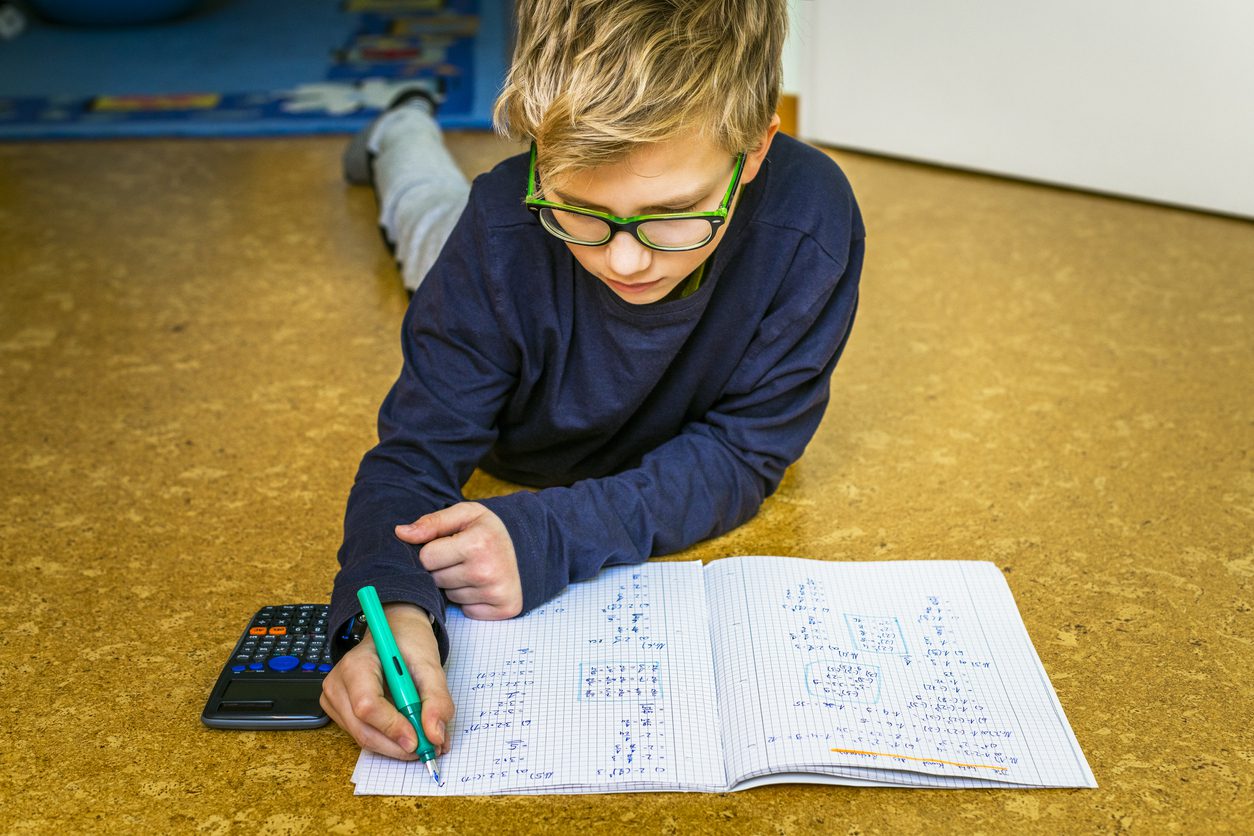

If your child works hard in math but still can’t seem to grasp basic concepts, you may be wondering if something else is going on. When effort alone doesn’t explain the gap, it’s worth looking deeper. For many families, that deeper look leads to a specific learning difference called dyscalculia.
Dyscalculia is more common than most people realize, but it’s often misunderstood or missed entirely. The good news is that with the right support, children with dyscalculia can absolutely thrive. This guide will help you understand what dyscalculia is, how to recognize the signs, and how to get your child the help they deserve.
What Is Dyscalculia?
Dyscalculia is a specific learning difference that affects how the brain processes numbers and math-related concepts. While sometimes called “math dyslexia,” the two are distinct. Dyscalculia specifically impacts numerical thinking, not reading.
It’s important to know that children with dyscalculia typically have average or above-average intelligence. They aren’t “bad at math.” Their brains simply process numerical information differently. This makes it genuinely harder to grasp concepts that other children may pick up more naturally. Research suggests dyscalculia affects roughly 3–7% of the population, so if your family is navigating this, you have plenty of company.
Dyscalculia isn’t a reflection of your child’s intelligence or effort. It’s simply a different way of processing numbers, and with the right approach, they can succeed.
What Are the Signs of Dyscalculia at Different Ages?

The signs of dyscalculia change as a child grows. A small quirk in a kindergartener can become a significant hurdle by middle school if it’s not addressed.
Signs in Preschool and Early Elementary (Ages 3–7)
The earliest signs often appear before formal schooling. You might notice your child has trouble learning to count, recognizing written numbers, or understanding basic comparisons like “more” vs. “less.” They may also struggle to see simple patterns or connect a number word to its actual quantity.
Signs in Elementary School (Ages 7–10)
As math instruction becomes more formal, the signs often become more obvious. A common indicator is difficulty memorizing basic math facts, like addition or multiplication tables, despite regular practice. Many children continue to rely on finger counting long after their peers have stopped and may struggle with concepts like place value or telling time on an analog clock.
Signs in Middle School and High School (Ages 11+)
By middle school, the challenges often expand. Students may find fractions, percentages, and early algebra particularly difficult. Everyday tasks like managing money, estimating quantities, or reading a map can also be confusing. This often leads to significant math anxiety, causing students to avoid homework or shut down during class.
At What Age Can Dyscalculia Be Detected?
Dyscalculia can sometimes be identified as early as ages 5–6, as children begin formal number-sense training. However, most children are diagnosed between ages 7 and 9, after a few years of school, and have revealed a consistent pattern of difficulty.
Because young children develop at different paces, it can be hard to spot a learning difference early on. What matters most is consistency. If you notice ongoing struggles (not just a tough week or a single challenging unit), it’s worth bringing up your concerns with your child’s teacher.
The earlier you identify what’s going on, the sooner you can provide the right kind of support for your child.
What Causes Dyscalculia?
While there is no single cause, research points to a few key factors that contribute to dyscalculia.
Brain imaging studies show that people with dyscalculia often have structural and functional differences in the brain regions responsible for processing numbers. These are not deficits in intelligence but simply variations in how the brain is wired for mathematical thinking.
Genetics also play a significant role, as dyscalculia tends to run in families. If a parent or sibling has a learning difference like dyscalculia or dyslexia, a child may be more likely to experience similar challenges. In some cases, dyscalculia also appears alongside other conditions like ADHD or language-processing disorders, which can make it trickier to identify on its own. For more information, our practical guide for supporting neurodiverse learners can provide additional insight.
What Can Be Mistaken for Dyscalculia?
Several other challenges can look like dyscalculia, so it’s important to understand the differences to find the right support.
| Challenge | How It Looks Similar to Dyscalculia | The Key Difference |
| Math Anxiety | Avoidance of math, poor test performance, and frustration. | Math anxiety is an emotional response to stress. A child may perform better when pressure is off. Dyscalculia is a cognitive processing difference that persists regardless of stress levels. |
| ADHD | Careless mistakes, trouble with multi-step problems, and difficulty focusing during lessons. | ADHD affects executive functions like focus and organization. The math errors are a symptom of inattention, not a core difficulty with number sense. Tutoring for kids with ADHD often focuses on leveraging their unique strengths. |
| Working Memory Issues | Difficulty holding numbers in mind to complete calculations, leading to errors in multi-step problems. | The child understands the math concept, but cannot hold and manipulate the information mentally to get to the answer. This is often tied to executive function skills. |
| Dyslexia | Trouble with word problems, understanding written instructions, and reading number words. | The difficulty stems from processing written language, not the numerical concepts themselves. You can learn more abouthow to support students with dyslexia here. |
| Gaps in Learning | A child who missed instruction due to illness or school changes may show significant math struggles. | These difficulties are due to a lack of exposure to foundational concepts, not a brain-based learning difference. Understandingwhy learning gaps are a problem can help you find the right solution. |
Because these challenges can overlap, a professional evaluation is the best way to get a clear picture of what’s going on with your child.
How to Get a Formal Evaluation
If these descriptions resonate with your experience, the next step is to seek clarity.
First, talk to your child’s teacher. Start by sharing your observations. The teacher can provide valuable insight into whether the struggles are consistent at school and how they compare to classroom expectations. A strong parent-teacher partnership is one of the best tools for supporting your child.
Second, request a professional assessment. A formal diagnosis is made through a comprehensive educational evaluation conducted by a qualified professional, such as a school or educational psychologist.
Finally, use the diagnosis as a roadmap. A diagnosis isn’t a label; it’s a tool. It unlocks access to school accommodations and provides a clear path for you and your child’s support team to find strategies that actually work.
A formal diagnosis doesn’t limit your child’s potential. It equips you with the information needed to find the right support and help them thrive.
How You Can Support Your Child at Home

A diagnosis is the start of a new, more effective approach to learning. Here are a few ways you can build your child’s confidence at home.
First, make math tangible and visual. Children with dyscalculia often learn best when they can see and touch math concepts. Use everyday objects like coins or blocks to represent numbers. For these kinesthetic learners, graph paper is a great tool for keeping numbers and columns aligned.
Next, shift the focus from speed to understanding. Timed math drills often increase anxiety and do more harm than good. Instead, celebrate the process of learning and discovery. Acknowledging their effort and small victories can rebuild the confidence that math struggles often erode. Simple praise like, “You set up that problem perfectly,” makes a real difference.
If you’re looking for more ideas, check out our guide on how to help your child with math at home.
How Tutor Doctor Can Help
If you’ve been recognizing your child in these descriptions, we want you to know that there is hope. At Tutor Doctor, we believe every student has untapped potential, and we’re here to help unlock it.
Our tutors specialize in working with children who learn differently, including those with dyscalculia. We don’t just reteach the same material; we use the visual, hands-on, and confidence-building strategies that are proven to help.
Each session is one-to-one and personalized to your child’s unique learning style and needs, creating a positive and empowering association with math. The benefits of one-to-one tutoring create a foundation for lifelong success.