
Helping your child study for a science test often means moving beyond re-reading to active recall, diagrams, and practice questions. Science requires both understanding key concepts and remembering the facts, vocabulary, and formulas that support them.
Understand Why Science Demands a Different Study Strategy
Your child can memorize the names of the stages of mitosis and still blank when the test asks what’s happening in each one. That’s because science layers concepts: if your child doesn’t understand what an atom is, they’ll struggle with molecules, then with chemical reactions. Gaps compound fast, especially for kids in elementary and middle school who’ve quietly fallen behind without anyone catching it early enough, which is why starting with the fundamentals isn’t optional here.
Build a Science Study Schedule
Spread study sessions over several days when possible rather than cramming everything into one night. Spacing out review gives your child more opportunities to recall and strengthen what they’ve learned.
- Day one: A quick first-pass read-through of the chapter or notes together. This is orientation, rather than in-depth studying.
- Day two: Active recall and diagrams, closing the book and testing what actually stuck instead of rereading it.
- Day three: Practice questions, filling in whatever gaps surfaced.
Even 30 focused minutes each evening makes a real difference if your family’s schedule is tight. Watch for studying too long in one sitting: a 90-minute session where your child’s brain checks out after 40 minutes is less useful than two focused 30-minute blocks.
Use Techniques Built for Science
- Draw and label diagrams from scratch, not traced or copied. Reproducing a diagram forces your child to think through what each part does.
- Make flashcards with plain-English explanations, not textbook definitions. “Photosynthesis = how plants make food using sunlight” sticks better than the official wording.
- Build concept maps instead of highlighting. Highlighting feels like studying, but it’s mostly passive. For topics like ecosystems or the rock cycle, have your child draw arrows connecting ideas; for photosynthesis, from sun to plant to oxygen, to make the flow visible.
Help Your Child Memorize Key Vocabulary and Formulas
Mnemonics are underused and effective. “King Philip Came Over For Good Soup” for taxonomy (Kingdom, Phylum, Class, Order, Family, Genus, Species) is a classic for a reason, and the same principle applies to organic chemistry formulas. Help your child invent their own; the sillier the better, since a phrase they made up sticks longer than one you hand them.
For formulas, repetition with context beats repetition in a vacuum. Instead of drilling F = ma, walk through an example: “If a 2 kg object accelerates at 3 m/s², what’s the force?” One worked example shows what the formula does and makes it usable under pressure.
Reinforce Concepts with Hands-On Activities at Home
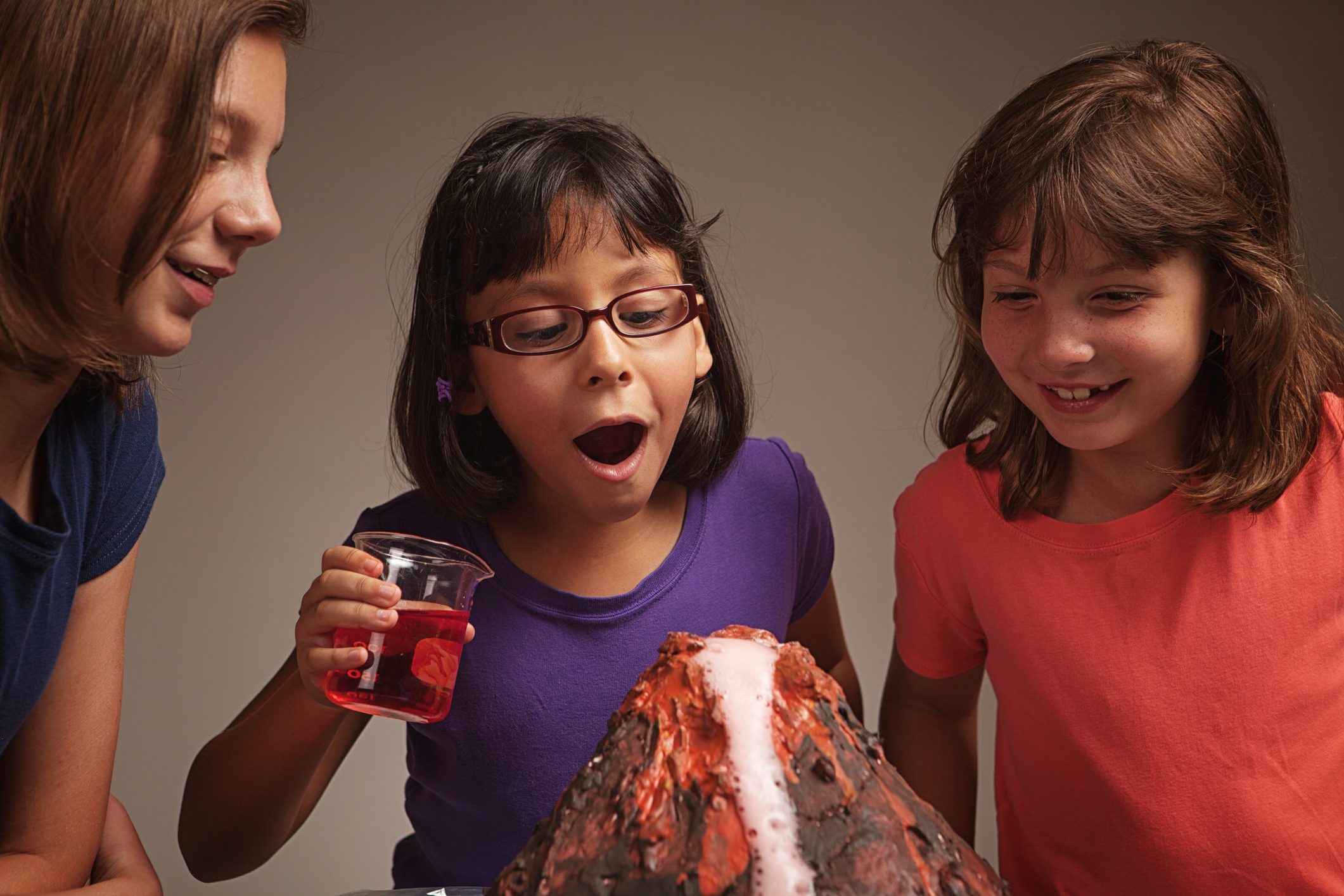
A baking soda and vinegar reaction demonstrates acid-base chemistry well enough to be memorable. A YouTube time-lapse of a plant growing can make photosynthesis click in a way diagrams can’t. For concepts that benefit from a visual or hands-on example, a two-minute kitchen experiment can sometimes make the idea easier to understand than another read of the textbook.
Use Practice Tests the Right Way

The most useful practice questions are the ones your child’s teacher already handed out: past quizzes, review sheets, end-of-chapter questions, since they match the material and phrasing your child will actually see on test day. Textbook questions or worksheets found online work as a backup once teacher materials run out, but shouldn’t be the first choice.
Have your child take a practice test under realistic conditions: no notes, a timer, at the kitchen table rather than sprawled on a bed. Then review it together and ask why, not just what, they got wrong. “I didn’t know that” and “I knew it but mixed it up” call for different fixes.
These techniques fix how your child studies. They don’t fix a real gap in understanding. If the same concept keeps tripping your child up no matter how they review it, that’s the difference, and it’s where personalized subject tutoring earns its place. Tutors with Tutor Doctor can help identify the specific concepts your child is struggling with and focus support where it’s needed most.
Manage Test Anxiety and Keep Your Child Motivated
Test anxiety in science is often anxiety about not understanding the material, which is different from general nerves.
- Validate the stress first: Saying “science tests are hard and it makes sense you’re nervous” before diving into study mode goes further than you’d expect, especially for kids whose confidence has taken a hit from struggling in class.
- Address the content gap directly: This does more for confidence than any breathing exercise. A learning assessment is one of the best ways to find exactly where a gap sits.
- Skip the last-minute cram: A light review of key diagrams and a formula or two on test morning is fine, but a full study session right before tends to raise anxiety without adding much retention.
If your child freezes on a question anyway, these test-taking tips are worth reviewing together the evening before: remind them to skip it, keep moving, and come back.
Frequently Asked Questions
How can I help my child create a study schedule for a science test?
Find out the test date and work backward to split the material into small, daily chunks rather than cramming it into one night. Even 20-minute sessions spread across a week beat a two-hour panic session the night before.
What is the best way to help my child memorize science facts and formulas?
Flashcards still work, especially handwritten ones, since writing forces the brain to process the information once before review even starts. For formulas, have your child explain what each part means out loud instead of just reciting it.
How can I use practice tests to help my child prepare for a science exam?
Use practice tests toward the end of the study period rather than the beginning, they work best once your child has reviewed the material and needs to find gaps. Treat each wrong answer as a topic to revisit, not proof they’re unprepared.
What are effective study techniques for children who struggle with science?
Kids who struggle with science often do better when abstract concepts get tied to something physical: drawing a diagram, acting out a process, or connecting a topic to something they already care about. A short video explanation before the textbook can also help when a concept isn’t clicking.
How can I reduce my child’s test anxiety before a science test?
Solid preparation can help reduce some test-related stress. A child who’s reviewed the material over several days may also feel more prepared and confident on test morning. Keep the night before to light review only, with a normal night’s sleep and a real breakfast.