

Most students study by rereading notes and highlighting textbooks, then wonder why none of it sticks on test day. The real problem is usually the method, not the effort. Effective studying is about working in ways that match how the brain actually retains information. Here’s a research-backed approach you can share with your teen before the school year ramps up.
Why Rereading Doesn’t Work
Rereading feels productive because the material starts to look familiar. But recognizing information isn’t the same as recalling it without help, and recall is exactly what a test requires. The brain needs practice retrieving information under real conditions, not just scanning it one more time.
Two techniques consistently outperform passive review: active recall and spaced repetition, both of which tie directly into how the brain retains information while studying.
Active Recall: Testing Instead of Rereading
Active recall means closing the notes and trying to produce the answer from memory before checking it. The effort of retrieving an answer, even when a first attempt is incorrect, strengthens memory more than passively rereading the correct one ever will.
| Instead of | Try |
| Rereading a definition | Covering it and writing it from memory, then checking |
| Reviewing worked examples | Solving practice problems cold, then comparing methods |
| Flipping through flashcards | Attempting an answer before flipping the card |
Spaced Repetition: Spreading Practice Over Time
Spaced repetition means reviewing material at increasing intervals instead of cramming it into one sitting. Because memories become harder to retrieve over time, returning to material at spaced intervals can strengthen and extend retention. Cramming may help with short-term performance, but material learned in one concentrated session is generally less likely to be retained over the long term.
For a test three weeks out, that might look like: review the same day material is introduced, again two days later, again after a week, and once more a few days before the test. A simple calendar marking review dates can be an effective alternative to a flashcard app with built-in spacing, especially when it is part of a broader study schedule your teen builds at the start of a unit.
The Pomodoro Technique
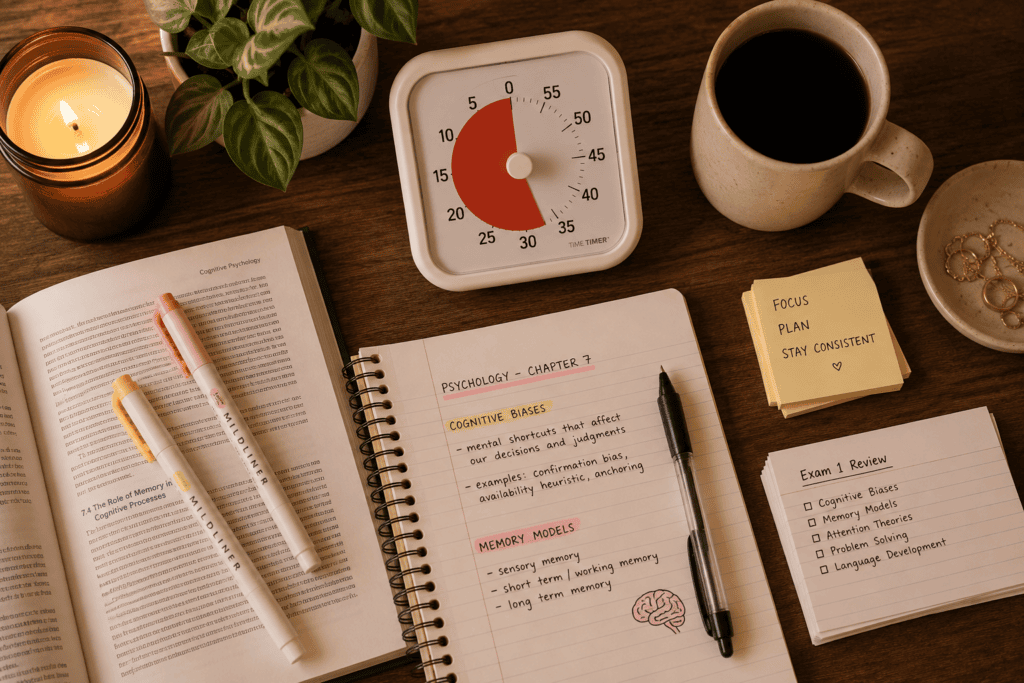
Long, unstructured sessions invite distraction. The Pomodoro Technique breaks study time into focused intervals, typically 25 minutes of work followed by a 5-minute break, with a longer break after every four rounds. The structure makes starting easier (25 minutes feels manageable) and protects focus (a break is always close, which makes it easier to resist a phone mid-session). It pairs well with other priority management strategies for students juggling a full course load.
If 25 minutes feels long at first, your teen can begin with 20-minute intervals and adjust the timing based on what helps them stay focused.
A Study Environment Built for Focus
A few changes at home can make it easier to focus: keep the phone out of reach rather than face-down nearby, since having it visible may still create a distraction. Use a consistent study spot the brain learns to associate with focus, rather than the bed or in front of the TV. Gather materials before sitting down, since getting up mid-session to find a calculator breaks concentration. None of this requires a dedicated office, just removing the small frictions that make focus harder than it needs to be. For a deeper walkthrough of setting this up at home, see our guide to turning your home into a learning haven.
A Sample Weekly Rhythm
New material gets a first recall pass the same day it’s taught, a second review two or three days later, and Pomodoro-structured sessions instead of one long evening at the desk. In the final days before a test, review centers on whatever’s been hardest to recall, not a full restart from page one. It’s more planning upfront, but far less wasted time overall. Pairing this rhythm with a study group can also help, since explaining material to peers is its own form of active recall.
When Independent Study Isn’t Enough
These techniques work, but they require a level of self-direction your teen may still be building. Active recall is hard when your teen isn’t sure what they don’t know yet. Spaced repetition takes planning that’s easy to let slide during a busy semester. And no technique fully replaces having someone walk through a confusing concept in real time and catch small misunderstandings before they grow into bigger gaps.
If your teen has the habits down but is still stuck in a specific subject, or needs more structured test prep support ahead of the SAT or ACT, a tutor can close that gap, with personalized guidance that reinforces the study habits already working rather than replacing them.
FAQs
What is the most effective way to study?
Active recall, testing yourself instead of rereading notes, is the most reliable technique backed by research, especially when combined with spaced repetition.
How long should a study session be?
A common starting point is 25 minutes of focused work followed by a 5-minute break, but students can adjust the intervals based on their age, attention and the task.
Does spaced repetition really work better than cramming?
Yes. Cramming may support short-term recall, but information reviewed only once is generally less likely to be retained than material revisited over several spaced sessions.
How can I help my teen build better study habits?
Set up a consistent, distraction-free study spot, encourage self-testing over rereading, and help them build a simple review schedule for upcoming tests.
When should my teen consider a tutor?
If the study habits are already in place but progress in a specific subject has stalled, a tutor can provide the personalized support that closes the gap.