

If your child stares at a blank page, you are not alone. Many students find writing to be one of the most challenging skills to develop. Yet it is essential for success across every subject, not just English class. For many children, writing can feel like the hardest kind of homework.
The good news is you do not need to be a professional author to help. Supporting your child’s growth as a writer is about consistency, encouragement, and using a few smart strategies. With the right approach, you can help them find their voice and build the confidence to share it.
Why Is Writing Difficult for My Child?
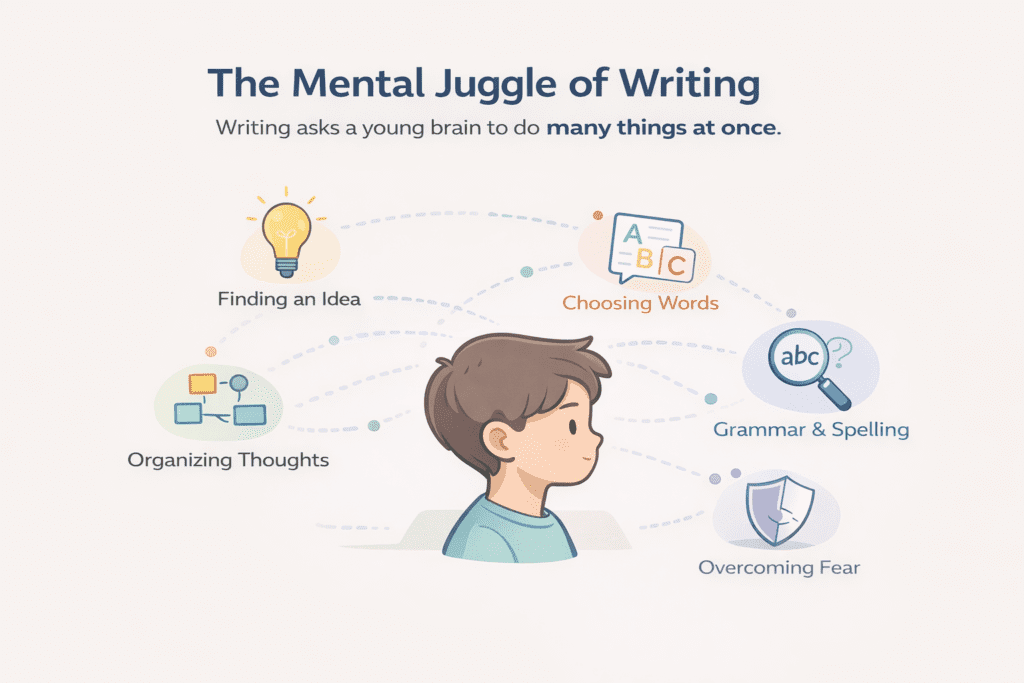
Understanding what makes writing feel overwhelming is the first step. Writing is a complex process that asks a young brain to juggle many tasks at once, from generating ideas to managing grammar and spelling. It is natural for a child to feel overwhelmed by this.
Common reasons for this struggle are often linked to specific challenges. For some children, the difficulty begins with organizing their thoughts, which makes it hard to start or to present ideas in a logical order. This can be compounded by a limited vocabulary, leading to frustration when they cannot find the right words. Low confidence, often from past discouraging feedback, creates a fear of making mistakes. In other cases, the challenge is physical, as poor fine motor skills can make handwriting uncomfortable. A lack of regular reading also plays a role by limiting a child’s exposure to the natural flow and structure of written language.
Building a Foundation for Good Writing
The most powerful way to help your child become a better writer is to make language and stories a natural part of daily life. This is about building foundational skills through enjoyable activities, not drills. One of the best habits to encourage is daily reading. When your child reads things they love, they instinctively absorb sentence structure and vocabulary. This develops a natural sense of how good writing should sound.
A private journal also provides a perfect, pressure-free space for your child to write without worrying about grades. Encourage them to write a few times a week about anything they want. The goal is not perfection but comfort and consistency. You can also make building vocabulary fun by playing word games or introducing a new family “word of the week.” These small habits build a richer word bank they can draw from in their own writing.
Making the Writing Process Less Intimidating
For many children, the hardest part of writing is simply getting started. You can make the process feel more manageable with a few helpful homework tips. If your child can tell you a great story but freezes when it is time to write, let them start with talking. Ask them to tell you what they want to say first. This helps organize their thoughts and turns writing into the much smaller task of recording what they have already expressed.
For a child who struggles to write but loves to talk, let them tell you their story first. This simple step can make all the difference. Teaching them to plan before they write also provides direction. A brief plan can prevent the frustration of not knowing what to write next. This does not need to be a formal outline. A simple list of main points can be enough to provide structure. You can also use sentence starters to break through writer’s block. Simple prompts that give them the first few words of a sentence can be a surprisingly effective tool to get them going, especially when writing compelling introductions.
Providing Gentle Guidance and Encouragement

How you respond to your child’s writing can either build their confidence or diminish it. Your role is to be an encouraging guide. When reviewing their work, focus on one thing at a time. Instead of pointing out every error, choose a single area for feedback, such as clear ideas or strong word choices. This targeted approach makes feedback manageable.
Your role is to be an encouraging guide, not a critic. Always celebrate what is working with positive reinforcement before you address what is not.
It is also important to make revision a normal part of the process. Help your child understand that the first draft is just a starting point. Professional writers go through many drafts. Reading their work aloud together is a great way to catch awkward phrasing or errors. Finally, give their writing a purpose beyond a grade. Sharing their story with family or creating a small “book” makes writing more meaningful. When children know someone will appreciate their work, they write with more care and pride.
When to Seek Additional Support
If your child consistently avoids writing or experiences significant anxiety around assignments, it may be time for more support. Sometimes, writing struggles are linked to underlying challenges that require a specialized approach. These can include neurodevelopmental differences like ADHD or learning disabilities such as dyslexia.
These signs can include emotional distress, such as extreme frustration during writing tasks. You might also notice that your child consistently writes far less than their peers. Other red flags are physical discomfort, indicated by handwriting that is very difficult to read, or a persistent inability to organize their thoughts in a logical sequence. If you notice several of these signs it might be time to find a tutor, professional support can make a world of difference for your child’s skills and self-esteem.
How Tutor Doctor Can Help
At Tutor Doctor, we believe every student has potential waiting to be unlocked. Our one-to-one tutoring is designed to do just that. We start by getting to know your child, including their interests and learning style, to create a personalized plan that builds their writing skills from the ground up.
Our tutors understand that confidence is the first step toward progress. We match your child with a tutor who is the right fit for their personality and needs because when a student feels understood, everything starts to click into place.
Contact Tutor Doctor today for a free consultation. Find out how personalized tutoring can help your child move from facing a blank page with anxiety to writing their story with confidence.