

If your child is preparing for the SAT, you’re probably wondering where to start. The good news is that excellent free practice resources are available to help your student build confidence and feel ready for test day. Taking practice tests is one of the most effective ways to prepare because it helps identify areas for improvement and transforms test day from something intimidating into something familiar.
Whether your child is just beginning their SAT journey or putting the finishing touches on their preparation, this guide will walk you through the best free SAT practice tests and show you how to use them effectively.
Understanding the Digital SAT
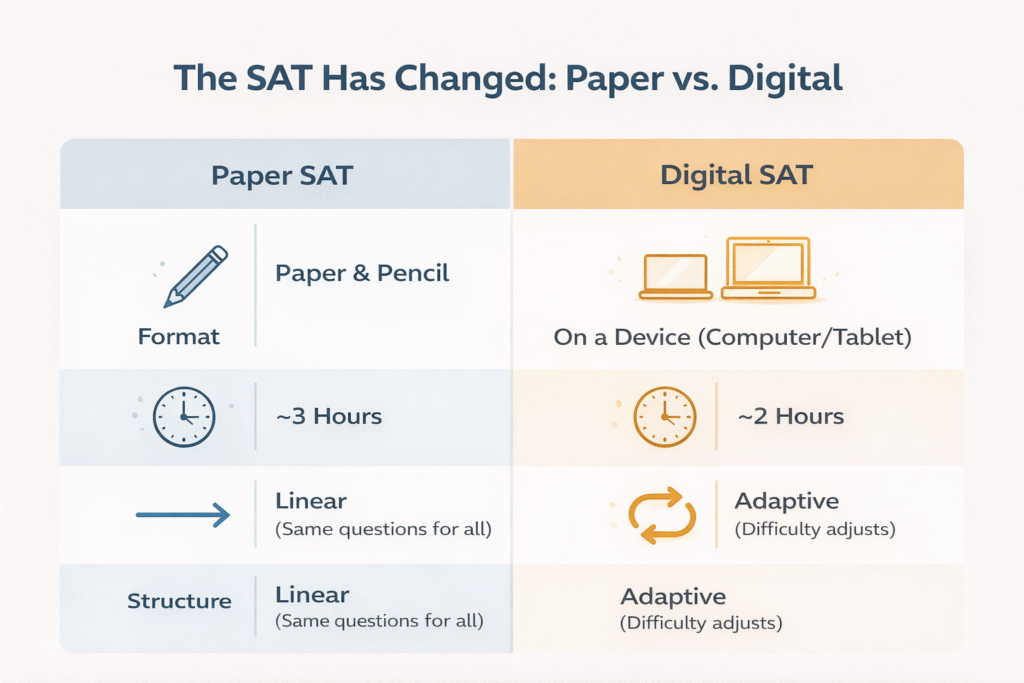
The SAT went fully digital in 2024, bringing significant changes to the testing experience. The test is now shorter at just over two hours instead of three, adaptive, meaning the second section adjusts based on performance in the first section, and taken on a computer or tablet using the College Board’s Bluebook app.
Your student should focus on digital practice tests that mirror the actual testing experience they’ll have on test day. This familiarity helps reduce anxiety and boost confidence when it matters most.
If your child is feeling overwhelmed about the test format changes, you might find our guide on creating a positive study environment helpful for establishing the right atmosphere for practice.
Where to Find the Best Free SAT Practice Tests
College Board’s Official Resources
College Board creates the actual SAT, making their practice materials the most accurate preparation tool available. They offer seven full-length digital adaptive practice tests numbered 4 through 10 through their free Bluebook app. You can download Bluebook on Windows, Mac, iPad, or a school-managed Chromebook. Once your child creates a College Board account, they can take timed, scored practice tests that replicate the real exam experience.
These tests use the same format, timing, and scoring that your student will experience on test day. The adaptive testing feature adjusts the difficulty of the second module based on performance, exactly like the real SAT.
After completing each practice test, your student receives an instant score report showing exactly where they stand. College Board has partnered with Khan Academy to provide targeted skill practice. While Khan Academy no longer offers full-length practice tests, it provides thousands of practice questions, video explanations, and personalized study plans. After taking a Bluebook practice test, your student can connect to Khan Academy for additional support in specific areas that need attention.
For students with approved paper-based accommodations, College Board offers downloadable PDF versions of SAT Practice Tests 1 through 10. These linear tests are designed for students who will take the paper version on test day.
Kaplan Free Practice Test
Kaplan offers a free full-length digital SAT practice test that simulates the actual testing experience. After your child completes the test, they receive a detailed score report showing performance across different subjects and topics. Kaplan also includes instructional videos and additional practice covering key SAT topics, plus a daily practice question feature for students who want consistent preparation.
Princeton Review Free Resources
Princeton Review provides free digital SAT practice tests with comprehensive score reports. They offer both adaptive online practice tests and downloadable PDFs. Princeton Review also hosts free strategy sessions and topic-specific workshops that complement practice test work.
Magoosh Practice Test
Magoosh offers a free full-length practice test designed to mirror the digital SAT experience. Students receive a predictive score estimate and a detailed breakdown of strengths and areas needing improvement. The score report clearly shows where your child performed well and where they should focus study time, making it easy to create a targeted preparation plan.
How to Help Your Student Use Practice Tests Effectively
Having access to free practice tests is just the first step. How your student uses these resources makes the difference in building confidence and improving performance.
Starting with a Baseline
The first practice test should happen under realistic conditions with proper timing, a quiet space, and minimal distractions. This baseline shows where your child is starting and helps identify which areas need the most attention.
It’s normal if this first score isn’t where you’d like it to be. Practice tests are designed for learning and improvement before the actual exam.
If your child is showing signs of test anxiety or struggling with focus during practice, it might be time to consider additional support. Our article on recognizing when your child needs a tutor can help you identify key indicators.
Creating Real Test Conditions
To get accurate results and build the stamina needed for test day, encourage your child to take the full test in one sitting. The SAT lasts over two hours on a Saturday morning, and students need to build the endurance to stay focused for the entire duration. This means timing each section precisely, taking the scheduled breaks without extending them, and minimizing distractions by putting phones away and finding a quiet space.
Understanding Where Real Learning Happens
Taking practice tests alone won’t improve scores. Real growth happens during review.
For every practice test, your student should analyze every incorrect answer. They should ask why they got it wrong, whether they didn’t know the material or rushed through the question, and whether it was a misreading or a careless mistake.
It’s also worth reviewing questions they got right, especially if they guessed. Making sure they understand why the right answer is correct and can explain the reasoning builds true understanding rather than lucky guessing.
After two or three practice tests, patterns often emerge. Your child might consistently struggle with specific math concepts or particular types of reading comprehension questions. These patterns reveal exactly where to focus study time, making preparation much more efficient.
Using College Board’s My Practice Portal
After taking a Bluebook practice test, your student should log into the My Practice portal to view detailed score breakdowns and review each question with explanations. The portal offers a practice feature that generates targeted questions based on test performance and connects directly to Khan Academy for additional skill practice on areas that need work.
Finding the Right Balance
Quality matters more than quantity when it comes to practice tests. A good approach is to take one baseline test at the start, spend the next few weeks on targeted studying and skill improvement, then take another practice test every two or three weeks to measure progress.
Most students benefit from taking three to four full-length tests total before test day.
What’s important is allowing time between practice tests for focused study on areas that need improvement. Taking multiple tests without addressing knowledge gaps won’t lead to meaningful progress.
Between full-length tests, your student can use free resources like Khan Academy, Kaplan’s daily questions, or Mometrix’s subject-specific questions to practice particular question types that give them trouble. For students who struggle with organization and time management, our guide on priority management for high school students offers practical strategies.
Common Mistakes to Avoid
Some students don’t time themselves during practice, adding extra minutes to sections. This creates an inflated score and false sense of preparedness. Encourage your child to stick to actual time limits so they know exactly where they stand.
Another common mistake is skipping the review process. Taking the test provides only about a quarter of the value. Reviewing and learning from mistakes is where real growth happens. Help your child plan time to thoroughly review each practice test they take.
Practice tests work because they expose gaps in understanding, not because students memorize specific questions. The focus should be on mastering underlying concepts, not memorizing particular answers.
While third-party practice tests can be helpful supplements, nothing replicates the actual SAT better than College Board’s own materials. Make sure your child spends most of their practice time with official resources.
Creating a Practice Schedule That Works
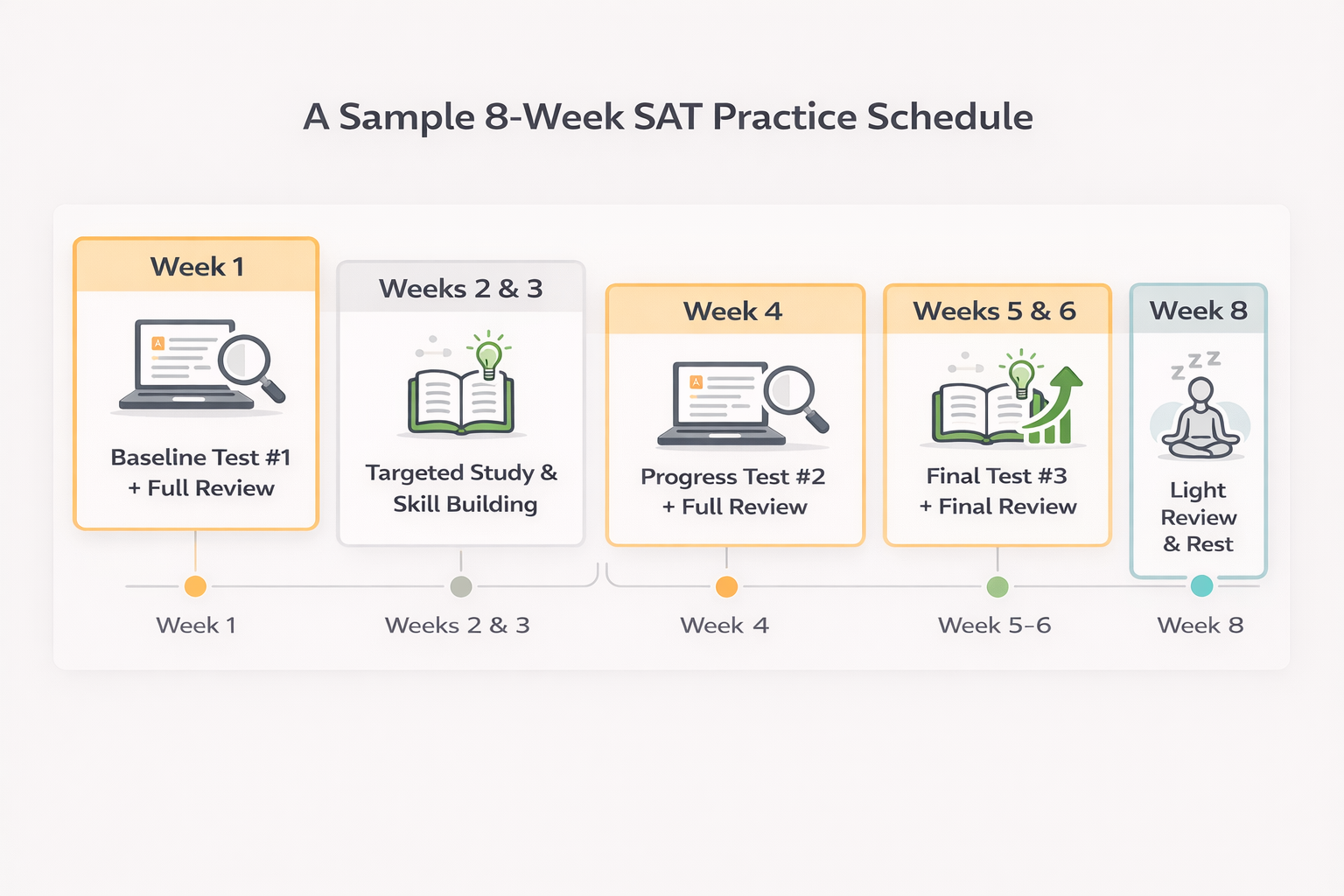
Here’s a sample eight-week approach to practice tests. In the first week, your child takes a baseline practice test, reviews all questions, and identifies two or three focus areas. Weeks two and three involve targeted studying on those weak areas without taking another full practice test. In week four, they take a second practice test, review it thoroughly, and adjust their focus areas based on what they learned.
Weeks five and six continue with targeted practice while also working on timing strategies. Week seven includes a third practice test and final review of any persistent areas that need attention. Week eight should be a light review only because at this point, your child’s brain needs rest before test day.
Students who struggle with creating and sticking to study schedules might benefit from learning how to create a planner that works for them.
When Your Child Needs More Support
Practice tests are essential tools, but they don’t teach the underlying content or test-taking strategies. If your child is consistently scoring below their goals despite taking multiple practice tests, having difficulty with specific content areas, struggling with time management, or feeling overwhelmed or anxious about the test, they might benefit from personalized support.
Signs Your Child May Need Additional Help:
- Consistently scoring below target goals
- Difficulty with specific content areas
- Struggling with time management
- Feeling overwhelmed or anxious about the test
If you’re wondering whether SAT and ACT scores are still important in today’s college admissions landscape, we’ve covered the latest trends and what they mean for your family.
Our tutors at Tutor Doctor create customized SAT prep plans based on each student’s unique strengths, learning style, and target score. We know that every student learns differently, and we match your child with a tutor who understands exactly how to help them build both skills and confidence. You’ll receive updates after every session so you can see the progress happening, and our Tutor Fit Guarantee means we’ll always work to get the right match for your child.
To learn more about the benefits of one-to-one tutoring and how personalized support can make a difference in test preparation, explore our comprehensive guide.
Helping Your Student Feel Ready
The best free SAT practice test is the one your student will actually use thoughtfully. Start with official College Board resources through the Bluebook app, help your child establish a regular testing and review schedule, and supplement with high-quality resources when it makes sense.
Score improvement doesn’t come from simply taking more tests. It comes from thoughtful review, targeted practice on areas that need attention, and building both knowledge and confidence.
With the right approach to practice tests and consistent effort, your child can walk into test day feeling prepared and capable. If test anxiety is a concern, our guide on moving from fear to focus offers practical strategies for managing pre-test nerves.
Ready to get started? Download the Bluebook app this week and help your student schedule their first practice test. The sooner they begin, the more time they’ll have to grow their skills and the more comfortable they’ll feel when test day arrives.
Need personalized SAT prep support? Our experienced tutors can help your child develop effective test-taking strategies, master challenging content areas, and build the confidence they need to succeed. Contact us today to learn how we can create a customized preparation plan that fits your child’s unique learning style and goals.