

As SAT test day approaches, it’s natural to worry about forgetting something important. A smooth, stress-free morning starts with a little planning. This guide is your simple checklist for what to bring, which documents are required, and last-minute tips to help your child walk into the test center feeling confident and ready.
What You Need to Bring to the SAT
Here are the absolute must-haves for test day. Double-checking this list the night before will help ensure a smooth and stress-free morning.
A Fully Charged Testing Device
Since the SAT is now digital, your student will need an approved testing device, such as a laptop, iPad, or school-managed Chromebook. It must be fully charged and have the Bluebook™ application installed with the exam setup completed 1-5 days before the test. It’s also wise to pack a charging cable and a portable power bank as a backup.
A Printed Admission Ticket
While a digital version on a phone can serve as a backup, a physical, printed copy of the admission ticket will make the check-in process much smoother.
An Acceptable Photo ID
This is crucial for entry. Your student cannot take the test without a current, valid photo ID that matches their registration details. We’ll cover the specific requirements in the next section.
College Board Login Information
Ensure your child knows their College Board username and password, as they will need it to log into the Bluebook app on their testing device.
Pencils or Pens for Scratch Work
Even though the test is digital, your child will be given scratch paper. Bring a few No. 2 pencils or pens for working through problems and taking notes.
What Documents and ID Are Required for the SAT?
Proper identification is non-negotiable, and it’s one of the most common reasons students are turned away. An acceptable ID must be a current, original document (not a photocopy) with a clear photo and a name that exactly matches your student’s registration.
Acceptable forms of photo ID include government-issued documents like a driver’s license, non-driver’s ID card, valid passport, or military ID. An official student ID card from your child’s current school is also accepted.
Double-check that your student’s ID is not expired and that the first and last names on it are an exact match to their SAT registration. Test centers are strict about this rule.
If your child does not have one of these, you can use the College Board’s Student ID Form. This form must be prepared and signed by an official at your child’s current school (or a notary if homeschooled) and include a current, attached photo. This option is only for students under 21 testing in the U.S.
Be aware that test centers will not accept birth certificates, Social Security cards, credit cards, employee ID badges, or any temporary or digital copies of an ID.
What Not to Bring to the SAT
It’s just as important to know what to leave at home. The College Board has strict rules, and bringing a prohibited item can lead to dismissal or score cancellation.
All electronic devices, other than the approved testing device, are forbidden. This includes cell phones, smartwatches, fitness trackers, and headphones (unless approved as an accommodation).
A Note on Cell Phones: If your child must bring a phone, it must be turned completely off and stored away. If a phone makes any noise (even a vibration) during the test, your child will be dismissed immediately and their scores will be canceled.
Also, leave all study materials at home, such as textbooks, notes, dictionaries, and cheat sheets. Other banned items are highlighters, mechanical pencils, rulers, and any food or drink inside the testing room itself.
Last-Minute Tips for a Smooth Test Day

Your child has done the hard work. Now, it’s about showing up rested and ready.
The Night Before
The evening before is all about calm preparation and creating a positive study environment. Pack the test day bag together to avoid a morning scramble. Make sure it includes the required items: the printed admission ticket, photo ID, and fully charged testing device. It’s also a good idea to pack an approved calculator with fresh batteries, a simple watch (with no alarm), and a water bottle with healthy snacks for the breaks. Lay out comfortable, layered clothing for the morning. Once everything is ready, encourage a light review of key formulas, but avoid heavy cramming. A good night’s sleep is far more valuable, so aim for at least 7-8 hours of rest.
The Morning Of
Plan to wake up with plenty of time to eat a balanced breakfast without rushing. A meal with protein, complex carbohydrates, and healthy fats—like eggs with whole-grain toast or oatmeal with nuts—can provide sustained energy and fuel the mind for better learning.
Plan to arrive at the test center by 7:30 AM. Test center doors close promptly at 8:00 AM, and late arrivals are not admitted.
Arriving early provides a buffer for finding the room, checking in, and taking a few deep breaths before the test begins.
Advice to Share with Your Child for the Test
Remind your child of a few simple strategies for the exam. If they feel anxious, it’s okay to pause and take a few deep breaths to reset and refocus. They should also avoid getting stuck on a single difficult question. It’s better to make an educated guess and move on, as the SAT doesn’t penalize for wrong answers.
Encourage them to use their breaks wisely to stretch, have a snack, and step away from the screen. It’s best to avoid discussing questions with other students during this time. Most importantly, remind them to trust the preparation they’ve put in and to do their best.
How Does the ACT Checklist Compare?
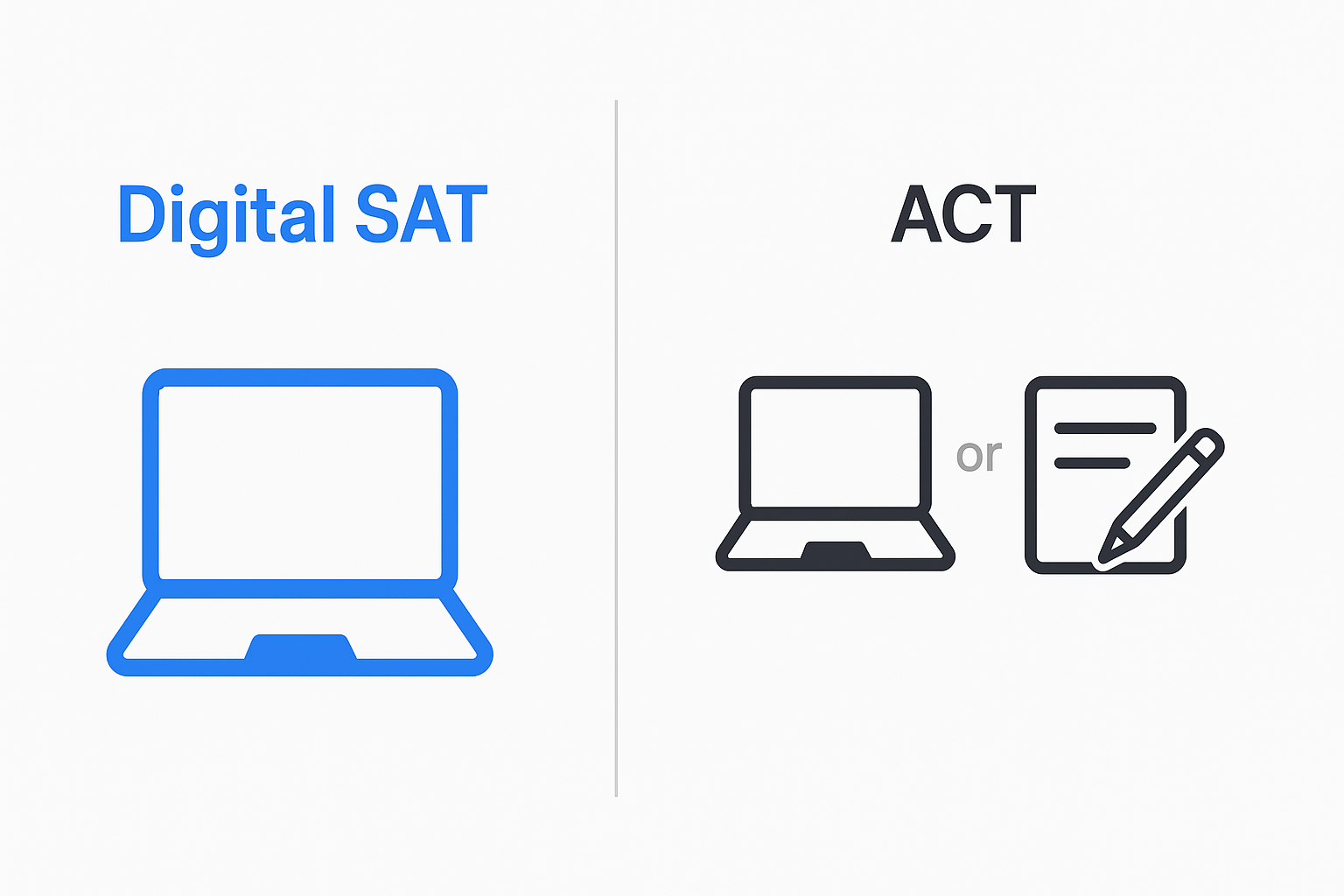
If your student is also preparing for the ACT, you’ll find the checklist is very similar. Both tests require a printed admission ticket, an acceptable photo ID, an approved calculator, and a non-beeping watch. The policies on snacks, water, and prohibited items are also nearly identical.
The key difference lies in the testing format. While the SAT is fully digital, the ACT currently offers a choice between a traditional paper-and-pencil test and an online version. To help decide which test is a better fit, it’s helpful to understand if SAT/ACT scores are still important for your child’s target colleges. For the paper ACT, your child will need several sharpened No. 2 pencils, as mechanical pencils are not allowed. For the online ACT, the device requirements are similar to the SAT’s.
Final Thoughts for a Confident Test Day
A prepared student is a confident student, and this checklist is your tool to make test day as smooth as possible. If the results aren’t what your child hoped for, remember that they can always retake the test. Many students see improvement with more preparation.
And if you’re wondering if your child could use extra support, here are 10 signs it might be time to find a tutor. We provide one-to-one, personalized tutoring designed to build the skills and confidence to reach their test score goals. Find a tutor near you to get started.