

Many students put sincere effort into studying but don’t see the results they hope for. This gap isn’t a reflection of their intelligence. It’s often about their study methods. While habits like re-reading notes or highlighting feel productive, cognitive science shows they create a temporary “illusion of knowing” rather than deep, lasting memory.
The good news is that research offers a clear roadmap for more effective learning. The most powerful study habits encourage the brain to actively retrieve information, connect ideas, and revisit concepts over time. By shifting from passive review to these active strategies, you can help your child retain more, reduce stress, and build genuine confidence for any test.
Why Common Study Habits Often Fall Short
Before exploring what works, it helps to understand why familiar methods like re-reading, highlighting, and cramming are less effective. These activities are passive. The brain recognizes the information as familiar but isn’t required to work to recall it. This leads to surface-level retention that quickly fades. Effective studying isn’t about seeing the material more. It’s about engaging with it more deeply.
Habits like re-reading and highlighting create an “illusion of knowing.” The brain recognizes the material as familiar but isn’t actively working to retrieve it, which is the key to building lasting memory.
Embrace Active Learning Strategies
The most significant shift your child can make is moving from passively reviewing material to actively using it. This forces the brain to work, which is precisely what builds strong, durable memories.
Practice Active Recall
Instead of re-reading a chapter, encourage your child to close the book and write down or say aloud everything they remember. This process of retrieving information from memory is far more powerful for learning than simply seeing the information again. Even getting it partially right and then checking their notes is an effective way to identify and fill knowledge gaps.
Explain It to Someone Else
One of the best ways to test for true understanding is to explain a concept in your own words. Ask your child to teach you about what they learned in school as if you’ve never heard of it. If they can explain how fractions work or the causes of a historical event without looking at their notes, they have genuinely learned it. The moments where the explanation falters pinpoint exactly where more focus is needed.
Use Practice Tests Early and Often
Practice testing is one of the highest-impact study strategies available. The act of answering questions strengthens memory and reduces test anxiety by familiarizing students with question formats. If your child is preparing for major standardized tests like the SAT or ACT, our test prep services can provide targeted practice and strategies.
Build a Sustainable Study Schedule
Consistency and structure transform studying from a daunting task into a manageable habit. The goal is to work with the brain’s natural rhythms, not against them.
If your child’s attention starts to drift after 30 minutes, that’s normal. The brain isn’t designed for hours of uninterrupted focus. Scheduling short breaks makes studying more sustainable, not less productive.
Space Out Study Sessions
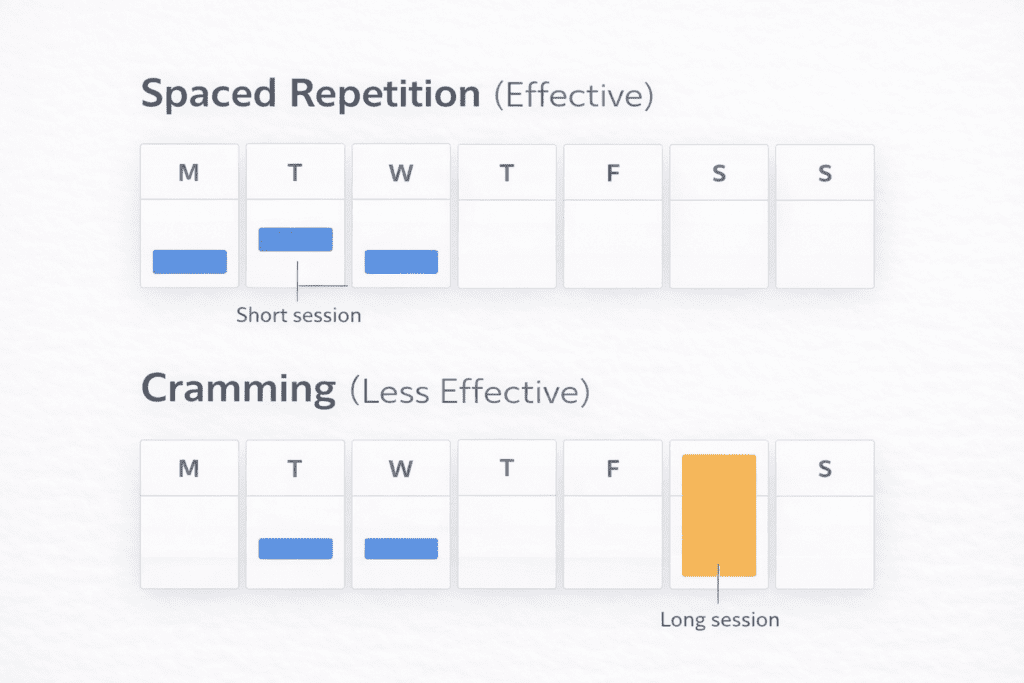
Cramming the night before a test may help pass a quiz, but the information is almost always forgotten soon after. Spaced repetition is the practice of studying a topic in shorter sessions over several days. This method is scientifically proven to lead to better long-term retention. A simple schedule of reviewing a topic on Monday, Wednesday, and Friday is much more effective than a single long session on Thursday night.
Work in Focused Blocks
The brain isn’t designed for hours of uninterrupted focus. The Pomodoro Technique and similar methods work because they align with our natural attention spans. Encourage your child to study in focused intervals of 25 to 45 minutes. These should be followed by a 5 to 10 minute break to rest and recharge. These scheduled breaks make studying more sustainable and prevent the mental fatigue that renders long study sessions ineffective.
Mix Up Subjects (Interleaving)
While it seems logical to master one subject before moving on, research shows that alternating between different subjects within a study session, a strategy called interleaving, improves retention and problem-solving skills. This forces the brain to work harder to switch gears, strengthening the memories associated with each subject.
Cultivate Deeper, More Connected Understanding

Memorizing isolated facts is fragile. True learning happens when students build a network of connected ideas, creating multiple pathways for recall. Instead of just reviewing a fact, encourage your child to ask, “Why is this true?” or “How does this connect to what I already know?” This simple shift promotes a deeper level of processing. Similarly, pairing written notes with a simple visual, such as a diagram, flowchart, or timeline, creates multiple pathways for recall, making it easier to remember under pressure. When facing a large project, the feeling of being overwhelmed is a major cause of procrastination. Help your child break the task into small, specific, and manageable steps. Defining the first one or two actions is often all it takes to build momentum.
Optimize the Learning Environment and Mindset
A student’s physical and mental environment plays a huge role in their ability to learn effectively.
| Strategy | Why It Works | How to Implement It |
| Protect Sleep | Sleep is not downtime. It’s when the brain consolidates learning and transfers information to long-term memory. | Prioritize a full night’s sleep, especially before a test. A well-rested student who studied for 45 minutes will often outperform a sleep-deprived student who studied for two hours. |
| Encourage Movement | Physical activity improves memory, attention, and focus. | Suggest a short walk, stretching, or active play during study breaks instead of scrolling on a phone. The following study block will be more productive. |
| Create a Distraction-Free Space | Notifications and background noise fragment attention and reduce the quality of learning, even if it doesn’t feel like it. | Help your child set up a designated study area free from phone alerts and other interruptions. If background noise is helpful, instrumental music is less distracting than music with lyrics. |
| Reframe Mistakes as Data | Viewing mistakes as feedback rather than failure builds resilience and encourages deeper engagement. | When your child gets a question wrong, frame it as useful information that shows them exactly where to focus their efforts. This fosters a growth mindset and reduces the fear of not knowing. |
When Your Child Needs More Than New Strategies
Even with the best methods, some students hit a wall. A challenging subject, a dip in confidence, or gaps from previous years can make progress feel impossible. That’s when one-to-one, personalized support can change everything.
At Tutor Doctor, our tutors do more than just review homework. They get to know your child’s unique learning style, strengths, and challenges. We create a personalized plan that not only addresses academic content but also builds the skills that make learning easier. Through our X-Skills™ program, students develop crucial executive functioning habits like organization, time management, and focus, skills that last a lifetime.
With our Tutor Fit Guarantee, you can feel confident that we’ll find the right personality match for your child, creating a supportive relationship where they feel understood and empowered.
Building Better Habits Takes Time
Changing study habits doesn’t happen overnight. Start by introducing one or two of these strategies and celebrate the small wins. The goal is to make learning feel more manageable and rewarding. By building these smarter habits, your child can develop the skills and confidence to succeed in school and beyond.
Frequently Asked Questions
What are the most effective study methods backed by research?
Active recall (testing yourself), spaced repetition (studying over time), and practice testing are consistently ranked as the highest-impact strategies. They are effective because they actively engage the brain, leading to stronger long-term retention than passive methods like re-reading.
How long should my child study each day?
Quality matters more than quantity. For most students, two or three focused sessions of 25 to 45 minutes, with short breaks in between, are more effective than a single, multi-hour block. The ideal duration varies by age, subject, and your child’s individual focus.
Are these study tips suitable for younger children too?
Yes. The underlying principles apply to all ages. Strategies like explaining what they learned, using visuals, and building a consistent routine can be adapted for elementary students in age-appropriate ways.
How can a tutor help my child develop better study habits?
Our tutors work with your child to build the skills and strategies that make studying more effective. Through our X-Skills™ program, students develop executive functioning habits like time management and organization right alongside their academic subjects. This integrated approach helps them become more confident, independent learners. If you’re ready to get started, learn more about how to develop better study habits.