
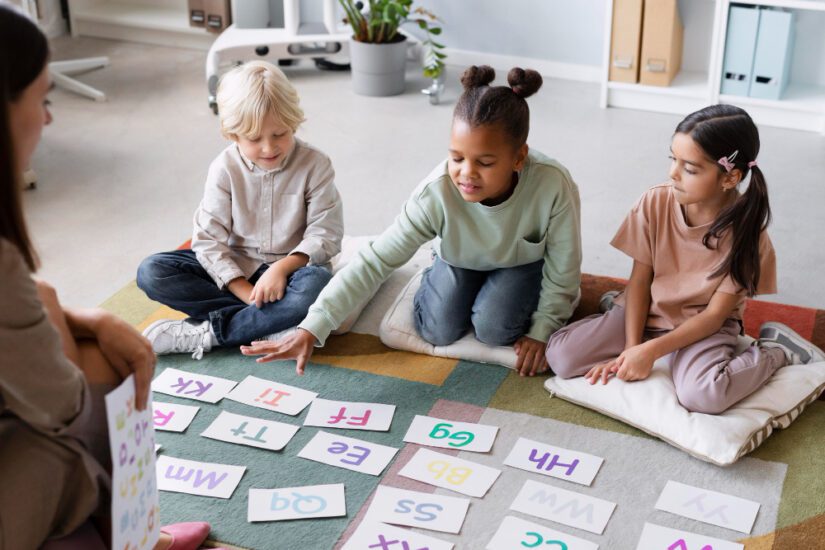
Watching your child learn to read is one of the biggest milestones of their early years, but it can also bring a little worry. You know phonics is the foundation for reading, but how do you teach it without turning learning into a chore?
The good news is that children learn best through play. When phonics is part of a game, song, or hands-on activity, young learners enjoy it. These activities are designed to make learning to read a positive and engaging experience for your child.
What Is Phonics and Why Does It Matter?
Phonics is the method of teaching reading by connecting sounds with letters or groups of letters. When a child learns that the letter “S” makes the /s/ sound, they are building a bridge between the words they see and the sounds they speak.
Developing strong phonics skills gives young readers the tools to sound out unfamiliar words on their own, rather than relying on guessing from pictures or memorizing. This approach is proven to be one of the most effective ways to build strong, confident readers, especially in the early years.
The Building Blocks of Phonics
Before diving into activities, it helps to understand the typical learning progression. Phonics skills build on each other, moving from simple to more complex. Here’s a quick look at the stages:
| Phonics Skill | What It Means | A Simple Example |
| Phonemic Awareness | Hearing and playing with sounds in spoken words (no letters involved). | Rhyming cat with hat; hearing the first sound in “sun” is /s/. |
| Letter-Sound Correspondence | Connecting a written letter to its specific sound. | Knowing that the letter ‘m’ makes the /m/ sound. |
| Blending & Segmenting | Putting sounds together to read a word or breaking a word into its sounds. | Blending the sounds /c/ /a/ /t/ to say the word “cat.” |
| Complex Patterns | Learning sounds made by letter teams and advanced vowel rules. | Recognizing the ‘sh’ sound in “ship” or the silent ‘e’ in “cake.” |
The activities below focus on the first few stages, which are perfect for preschoolers and early readers who are just beginning their phonics journey.
Phonics Activities for Preschoolers (Ages 3-4)

Around age three or four, children are ready for playful exposure to the sounds in language. The goal at this stage is about making them feel curious and successful.
Keep it Short
For young children, 5-10 minutes of focused play is more effective than a long lesson. Always end on a high note to keep them excited about learning.
Go on a Sound Safari
Turn a walk into a phonics adventure. Pick a target sound, like /s/, and say, “Let’s look for things that start with the /s/ sound!” As you spot a sidewalk, the sun, or a squirrel, you help your child tune into the sounds all around them.
Cook Up Some Silly Sound Soup
Grab a pot and a spoon and pretend to make “sound soup.” Announce that you’re only adding ingredients that start with a certain sound. For a /b/ soup, you might add pretend bubbles, bananas, and a big bear. The sillier the ingredients, the more fun it is.
Fill a Rhyme Time Basket
Find pairs of small toys or pictures that rhyme, like a toy car and a star, or a block and a sock. Place them in a basket and let your child pull them out to find the matches. This helps them hear the patterns in language without a formal lesson.
Phonics Activities for Early Readers (Ages 4-6)
As your child becomes more comfortable with letter sounds, you can introduce activities that involve building simple words. This is where the magic of decoding really starts to click.
Celebrate the Effort
When your child is sounding out a word, praise their effort, not just the right answer. Building confidence is just as important as building words.
Build Words with Magnetic Letters
Use magnetic letters on the fridge or a whiteboard to build simple CVC words. Call out a word like “mop” and help your child find the letters by sounding it out together: “What’s the first sound you hear? /m/? Great, let’s find the M!”
Create a Word Family Flip Book
This activity gives children a huge confidence boost. On a small notepad, write a word ending like “-at” on the right side of each page. On separate, smaller strips of paper, write consonants like ‘c’, ‘b’, ‘h’, ‘m’, and ‘s’ and staple them to the left side. Your child can flip through the consonants to create and read a whole list of words: cat, bat, hat, mat, sat.
Try a Multisensory Letter Mat
Let your child trace the shape of a large letter with their finger while saying its sound. You can use playdough to form the letter, trace it in a shallow tray of sand or rice, or use a paintbrush with water on the sidewalk. Combining touch and movement with sound helps reinforce memory.
When to Consider Extra Support for Your Reader
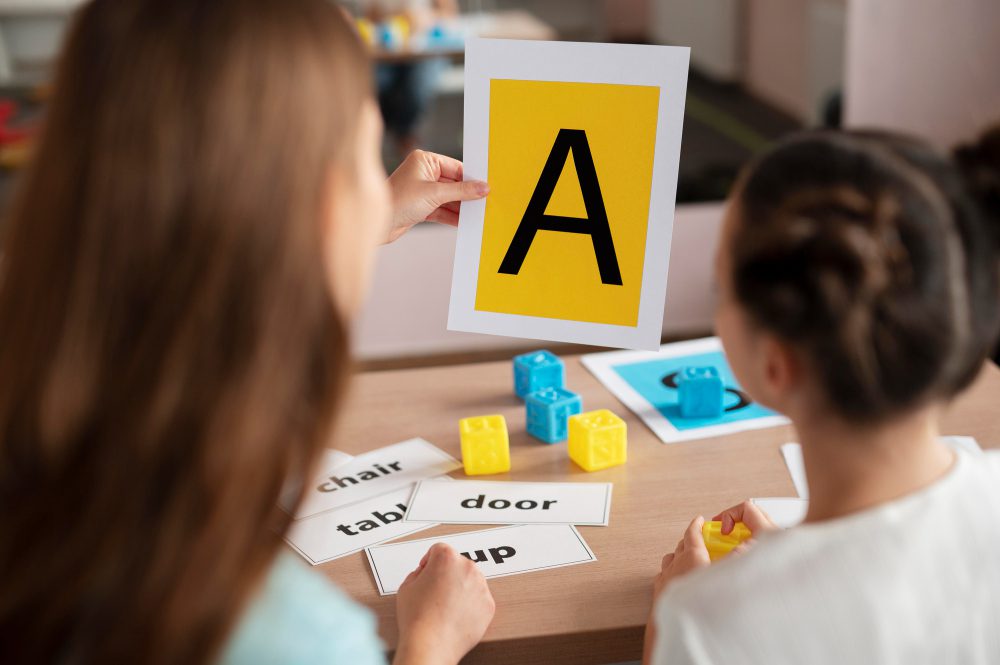
Every child learns at their own pace. Some pick up phonics quickly, while others need more time and repetition. If you’ve noticed your child getting frustrated during reading activities or seems hesitant to engage with letters and words, it’s completely okay. Sometimes, these struggles can also be a sign of a learning difference like dyslexia.
Needing extra time or a different approach is completely normal and is not a reflection of how smart your child is. It simply means they have their own unique learning style.
This is where Tutor Doctor can help. You know your child better than anyone, and if you worry they aren’t getting the support they need, our tutors work one-on-one with beginning readers, building phonics skills at a pace and in a style that fits your child, not a classroom of students.
We take great care in matching each child with a tutor who connects with their personality and learning style, because when that fit is right, learning starts to feel natural and confidence begins to grow. You’ll also receive updates after every session, so you’re always in the loop. Whether your child is just starting out or needs a little encouragement to feel capable, we are here to help.
Ready to help your child build confidence in reading? Find a tutor near you and schedule a free consultation.