

Quick Facts
Personalized support can make a significant impact on a student’s academic journey. A comprehensive meta-analysis from the National Bureau of Economic Research found that tutoring is a highly effective tool, with studies showing it can boost a student’s performance from the 50th percentile to nearly the 66th percentile. This highlights how one-to-one attention can help students unlock their potential and build confidence for challenges like the PSAT. (Source: NBER, “The Impressive Effects of Tutoring on Pre-K-12 Learning,” 2020).
Your Starting Point for Understanding the PSAT
If your teen recently took the PSAT, you might be navigating a new world of scores, percentiles, and National Merit requirements. Many parents tell us they feel overwhelmed by the information, and online searches often lead to more questions than answers.
You are not alone in feeling this way. Whether your teen is aiming for a National Merit Scholarship or you simply want to understand what their score means for the future, we’re here to help you cut through the confusion. This guide will walk you through everything you need to know about PSAT scores, in plain language that makes sense.
Understanding the PSAT Score Range
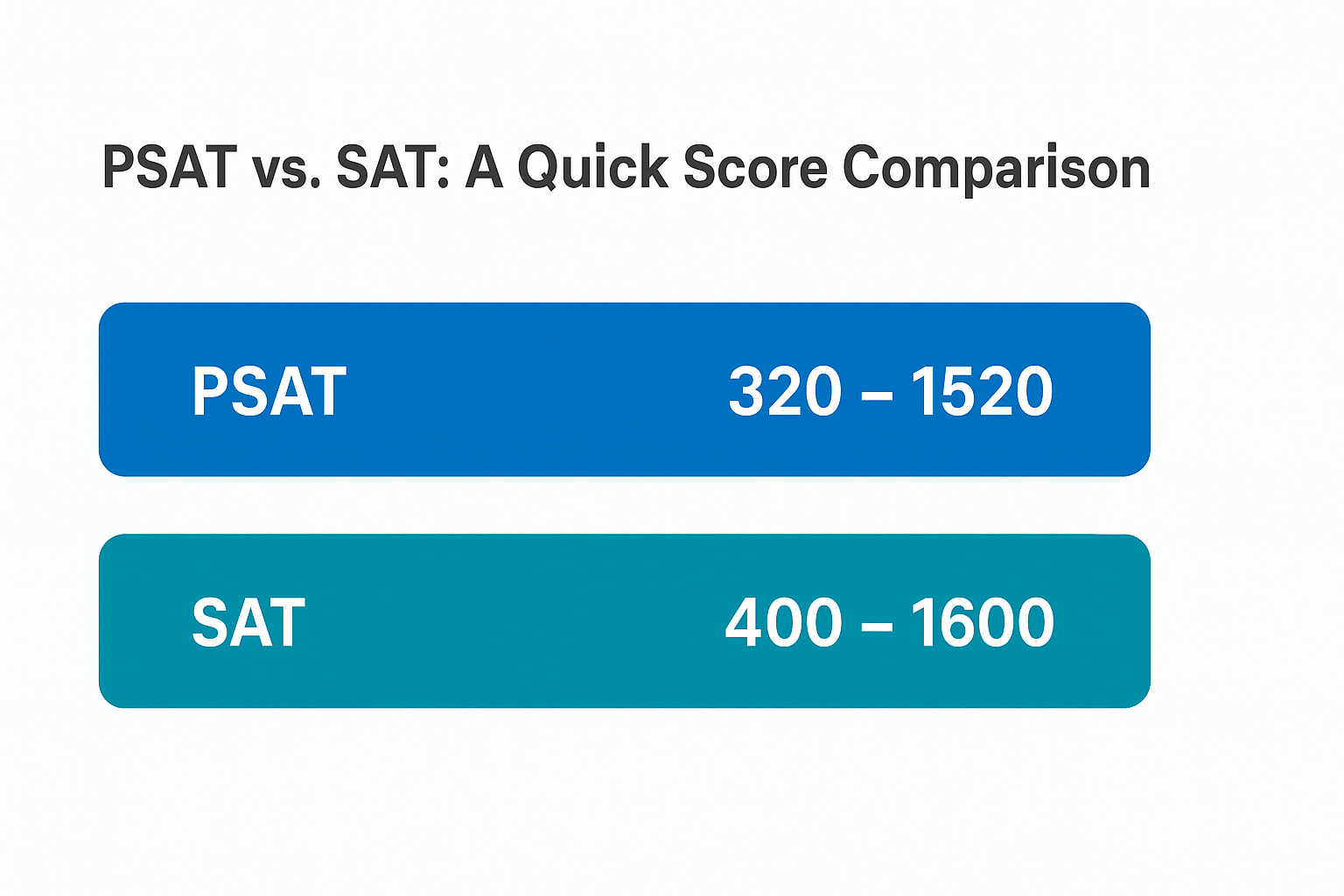
The PSAT is scored on a scale of 320 to 1520, which is slightly different from the SAT’s 400-1600 range. This is intentional, as the PSAT is designed to be a practice version of the SAT. The total score is a combination of two sections, each ranging from 160 to 760: Reading and Writing, which tests comprehension and grammar, and Math, which covers algebra, data analysis, and problem-solving. Adding these two section scores together gives you your teen’s total PSAT score.
What Is a Good PSAT Score?
A “good” score depends on your child’s grade level and personal goals. The most important thing is to view the PSAT as a starting point for growth, not a final judgment.
The average PSAT score is around 930. If your teen scores above this, they are already performing in the top half of all test-takers. For 10th graders, the PSAT is valuable practice and provides great insight into areas where they can build more confidence.
Only the PSAT taken in 11th grade counts toward National Merit consideration. The 10th-grade test is purely for practice.
For 11th graders, the scores carry more weight. A score of 1200 or higher is considered strong and shows college readiness. As scores climb, your teen enters more competitive territory. For example, a score in the 1300-1400 range typically places a student in the top 10% nationwide and often predicts an SAT score between 1350 and 1450.
What PSAT Scores Qualify for National Merit?
This is the question that brings most parents here. Qualification for the National Merit Scholarship Program isn’t based on the total score alone. Instead, the National Merit Scholarship Corporation (NMSC) uses a Selection Index, and the required score varies by state.
Your teen’s score report will show their Selection Index, which ranges from 48 to 228. It is calculated by doubling the Reading and Writing score, adding the Math score, and then dividing the sum by 10. For example, a student with a 720 in Reading and Writing and a 730 in Math would have a Selection Index of 217.
For National Merit, it’s not the total score that matters—it’s the Selection Index. This is the number that determines eligibility.
For the Class of 2026, the national cutoff for Commended Students is projected to be around 207-209. Students at this level are recognized for outstanding performance but do not advance. Semifinalists, on the other hand, represent the top 1% of scorers in each state, which is why cutoff scores vary.
Projected National Merit Semifinalist Cutoffs by State
The following table shows the projected Selection Index cutoffs for the Class of 2026. Official cutoffs will not be announced until September 2025.
| State | Projected Cutoff | State | Projected Cutoff |
| Alabama | 210 | Montana | 207 |
| Alaska | 209 | Nebraska | 212 |
| Arizona | 216 | Nevada | 211 |
| Arkansas | 210 | New Hampshire | 215 |
| California | 221 | New Jersey | 223 |
| Colorado | 217 | New Mexico | 208 |
| Connecticut | 221 | New York | 220 |
| Delaware | 219 | North Carolina | 217 |
| D.C. | 223 | North Dakota | 207 |
| Florida | 216 | Ohio | 216 |
| Georgia | 218 | Oklahoma | 210 |
| Hawaii | 217 | Oregon | 216 |
| Idaho | 211 | Pennsylvania | 219 |
| Illinois | 219 | Rhode Island | 214 |
| Indiana | 216 | South Carolina | 212 |
| Iowa | 212 | South Dakota | 209 |
| Kansas | 214 | Tennessee | 217 |
| Kentucky | 213 | Texas | 219 |
| Louisiana | 211 | Utah | 212 |
| Maine | 213 | Vermont | 212 |
| Maryland | 221 | Virginia | 221 |
| Massachusetts | 222 | Washington | 220 |
| Michigan | 217 | West Virginia | 207 |
| Minnesota | 216 | Wisconsin | 213 |
| Mississippi | 208 | Wyoming | 207 |
| Missouri | 214 | U.S. Abroad | 223 |
Cutoffs can shift from year to year. We recommend aiming for a Selection Index 2-3 points higher than your state’s projection to be safe.
Is a 1400 PSAT Score Enough for National Merit?
A total score of 1400 is excellent, but whether it qualifies for National Merit depends on the section scores and your state. Because the Reading and Writing section is weighted more heavily in the Selection Index formula, a higher score there can make a significant difference. For example, a balanced score of 700 on each section results in a Selection Index of 210, which would likely earn Commended status but only qualify for Semifinalist in states with the lowest cutoffs. However, if that same 1400 was composed of a 740 in Reading/Writing and a 660 in Math, the Index would rise to 214, making the student eligible in several more states.
The Path from Semifinalist to Scholar
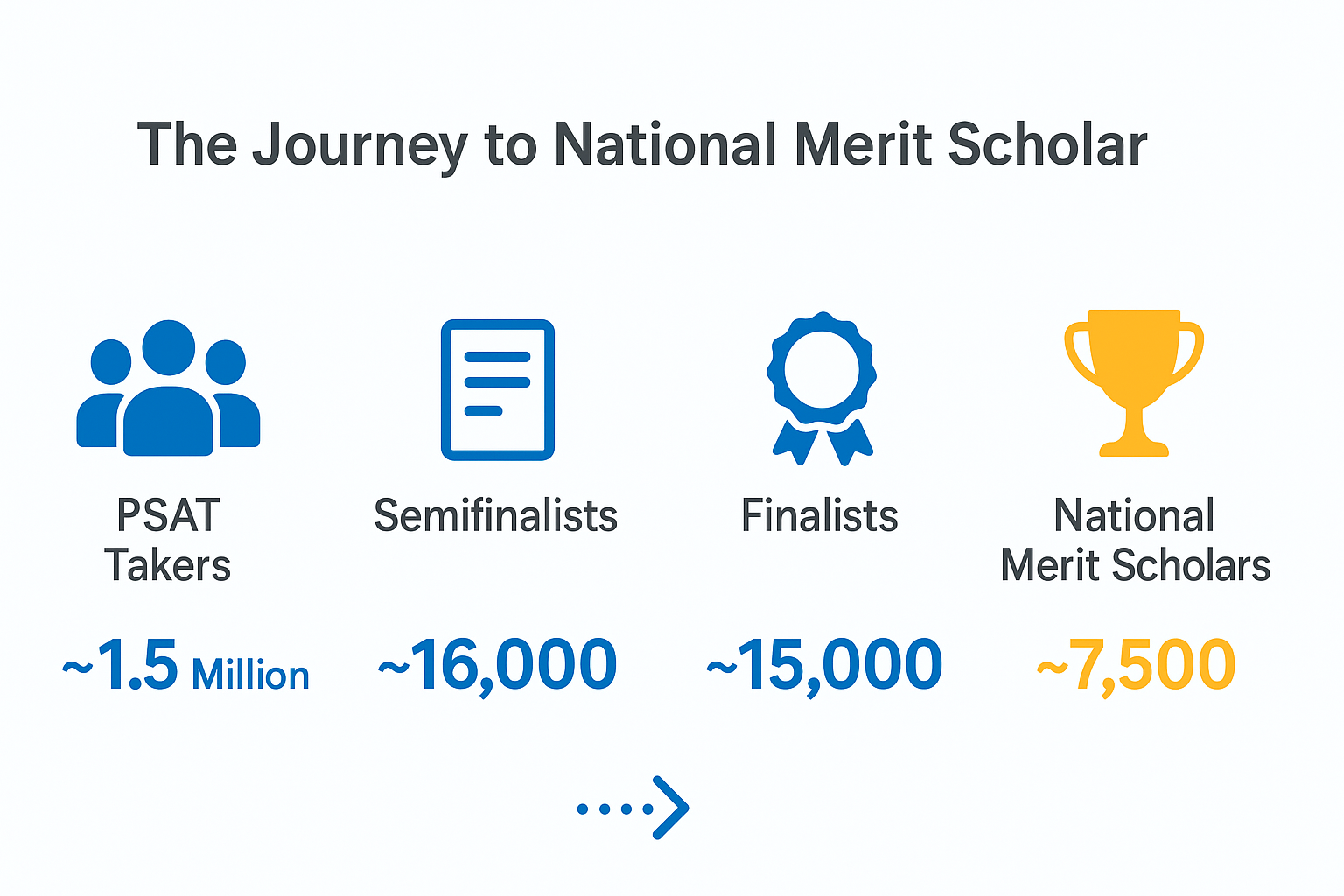
Being named a Semifinalist is a major accomplishment. From there, the journey continues in September of senior year, when about 16,000 Semifinalists are invited to apply to become Finalists. This application requires a strong academic record, a school recommendation, and a confirming SAT or ACT score. Every February, approximately 15,000 students become Finalists. From this group, about 7,500 will be awarded National Merit Scholarships. These awards come in several forms, including one-time $2,500 scholarships, corporate-sponsored awards, and scholarships sponsored by colleges themselves.
How PSAT Scores Predict SAT Performance
The PSAT is a great diagnostic tool for the SAT. Your teen’s score report provides a detailed breakdown of their performance, highlighting strengths and areas for improvement. This makes it a perfect roadmap for targeted SAT prep, as focused effort can lead to significant score growth. If you need help creating that roadmap, our expert tutors specialize in personalized test preparation.
How to Support Your Teen
Your encouragement makes a difference throughout the entire process. Before the test, you can help by creating a consistent, low-pressure study schedule. Once scores are released, the focus should shift to what the results reveal about your teen’s strengths and areas for growth.
A PSAT score is a roadmap, not a final judgment. Focus on what the scores reveal about your teen’s strengths and areas for growth, not just the numbers themselves.
If they are disappointed, remind them that the PSAT is practice. For students whose scores are near a state cutoff, the wait for the September announcement can be stressful. Reassure them that their strong performance is an achievement in itself and opens doors to many other opportunities. Learning how to ease school-related anxiety is a valuable skill for any high-achieving student.
Putting PSAT Scores in Perspective
PSAT scores provide a valuable snapshot of where your teen is right now, but they don’t define their potential. A strong score is validation of their hard work, while a lower score offers a clear roadmap for where targeted support can make the biggest difference.
National Merit competition is high, but your teen’s ability to grow and succeed with the right support is what truly matters. Every student’s journey is unique, and understanding the benefits of one-to-one tutoring can help you decide on the best next steps.
Frequently Asked Questions
Does the PSAT count for college admissions?
No, colleges do not see PSAT scores unless you choose to share them. The test is primarily for practice and National Merit eligibility.
Can my 10th grader qualify for National Merit?
No, only the PSAT taken in 11th grade counts for the National Merit Scholarship Program. Taking it in 10th grade is excellent practice.
What if my teen missed the PSAT?
The NMSC offers an Alternate Entry path. You must contact them by April 1st of your teen’s junior year to request permission to submit an SAT score instead.
Should we worry if the score is below average?
Absolutely not. The PSAT is a low-stakes diagnostic tool. Many students start with below-average scores and go on to achieve their goals on the SAT with focused preparation. It’s a starting point, not a final verdict.
When are PSAT scores released?
Scores are typically released online two to four weeks after the test date, usually from late October through mid-November. Your teen can access them through their school counselor or on the College Board website.
If your teen could benefit from personalized support as they prepare for the SAT or work on building academic confidence, we’re here to help. At Tutor Doctor, we specialize in one-to-one tutoring that meets students exactly where they are and helps them achieve their personal goals. Find a tutor near you to get started.